
How to Use ML Without a Data Science Team (A Guide for Small Businesses)
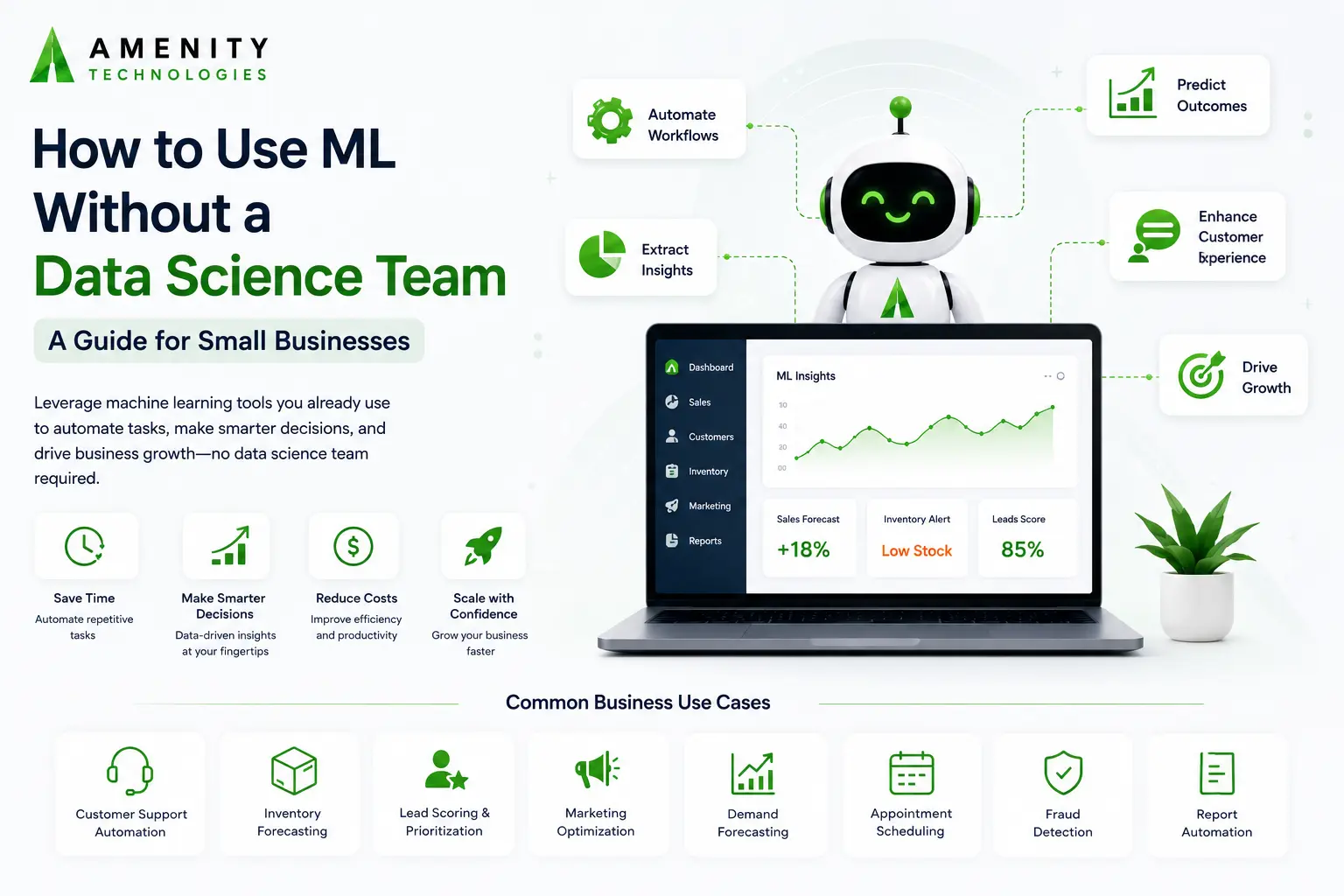
A retail store owner finishes the day by checking inventory levels. A service business owner reviews customer inquiries that still need responses. A small sales team tries to work out which leads deserve attention first.
Most small businesses already have more information than they can comfortably use.
That is where machine learning for small businesses stands out as the ideal and smart choice. Not because somebody wants to build complex systems, but because everyday decisions start taking more time as the business grows.
Many machine learning applications now exist inside tools companies already use, making adoption far more practical than most owners expect.
In this post, you will learn how you can use ML (Machine Learning) without relying on a specialized data science team and
Why Many Small Businesses Struggle to Adopt Machine Learning
The problem is understandable. When people hear about machine learning, they often picture large technology companies, expensive software projects, and teams filled with specialists.
That picture leaves out how most smaller companies actually adopt technology.
A local retailer trying to forecast demand, a distributor tracking stock levels, or a service business managing appointments is rarely searching for advanced data science expertise. The goal is usually much simpler: spend less time on repetitive work and make better decisions with the information already available.
That is one reason AI for small business adoption often starts with existing software rather than custom development.
Where Machine Learning Already Exists Inside Everyday Business Tools
Many small business owners use machine learning solutions before they ever call them that.
An online store owner receives product recommendations from an eCommerce platform. A marketing tool suggests the best time to send a campaign. A customer support system automatically prioritizes incoming requests.
None of those businesses hired data scientists to build those capabilities. The technology already exists inside the software.
The Email Platform Is Doing More Than Sending Emails
Many marketing tools quietly analyze engagement patterns and recommend actions based on previous customer behavior.
Customer Support Software Often Sorts Work Automatically
Support requests are frequently organized, categorized, or prioritized without somebody manually reviewing every message.
Sales Tools Regularly Surface Better Opportunities
Lead scoring and forecasting features help teams decide where their attention is most likely to produce results.
For many companies, the first step into AI-powered business tools happens without a dedicated machine learning project ever being planned.
Practical Machine Learning Applications That Solve Real Business Problems
Most small businesses do not adopt technology because it is innovative. They adopt it because something is slowing them down.
The Same Customer Question Arrived Again
Some businesses answer the same inquiries dozens of times each week. Tools that organize requests or suggest responses can reduce that workload without changing how the team operates.
Nobody Was Sure How Much Stock to Order
When orders start coming in more frequently, inventory planning can quickly turn into guesswork. Past sales trends usually provide a clearer picture than instinct ever can.
The Marketing Spend Felt Like a Guess
Many owners know money is being spent on marketing but struggle to identify which efforts are actually generating customers. Better visibility often matters more than more advertising.
The Calendar Needed Constant Attention
Appointments change. Cancellations happen. Demand shifts unexpectedly. Small business automation often starts with reducing the time spent adjusting schedules manually.
Why Most Small Businesses Do Not Need a Data Science Team
Many companies assume machine learning begins with hiring specialists. In reality, most small businesses get started by using tools that already contain the technology.
Buying Capability Is Different From Building Capability
A retailer using demand forecasting software is not building machine learning models. The platform already handles that work. The business simply uses the outcome to make better decisions.
The Problem Usually Matters More Than the Model
Few owners care how a prediction is generated. They care whether it helps reduce waste, improve planning, or save time across daily operations. These practical outcomes are often the first machine learning benefits a business notices.
Start With the Problem, Not the Technology
Most small businesses do not begin their technology journey by searching for machine learning. They start with frustration.
Too Much Time Disappears Into Repetitive Work
Tasks like maintaining spreadsheets and moving information between different tools may seem minor on their own, but they can add up over the course of a week. For many organizations, business process automation starts by simplifying these everyday workflows.
The Team Keeps Solving the Same Issue
When the same operational bottleneck appears repeatedly, it is usually a sign that the process needs attention rather than the people involved.
Growth Creates New Operational Pressure
What worked for ten customers may not work for a hundred. Many small business automation efforts start when existing workflows can no longer keep up with demand.
Technology decisions tend to be more successful when they are attached to a specific business problem rather than a desire to adopt new technology.
How No-Code Machine Learning Changed the Conversation
For many small businesses, the biggest surprise is discovering that no-code machine learning is already built into some of the tools they use every day.
The Feature Was Already There
A business upgrades its software and suddenly notices demand forecasts, lead scoring, or customer recommendations. Nobody hired a specialist. Nobody built a model.
The Tool Solved the Problem
Most owners are not looking for machine learning. They are looking for fewer scheduling conflicts, better inventory decisions, or more productive marketing campaigns.
Trying Something New No Longer Feels Expensive
Testing a feature inside existing software is very different from funding a technology project. The commitment feels smaller, which makes experimentation easier.
One Improvement Usually Leads to Another
A team saves time in one area and starts looking at the next bottleneck. That is how many AI automation for SMEs initiatives quietly begin.
Common Processes That Are Already Being Automated
The shift often happens quietly. A customer receives a faster response because requests are sorted automatically. A manager notices inventory warnings earlier than before. A marketing campaign reaches the right audience without hours of manual filtering.
Many AI-powered business tools work in the background. The process feels the same to employees, but far less time is spent on repetitive work.
Avoiding Expensive Mistakes During Early Adoption
One local business spent weeks comparing software before deciding what problem it wanted to solve. That approach is more common than many realize.
Chasing Features Instead of Friction
The better starting point is usually the task everyone complains about, not the feature everyone talks about.
Trying To Change Everything At Once
Most improvements become easier to measure when one process changes at a time.
Build Efficiency Before Adding Complexity
Few small businesses wake up needing machine learning.
What they notice is time disappearing into scheduling changes, inventory checks, customer follow-ups, or reporting tasks. Solving those issues is often where machine learning for small businesses creates its first measurable value.
If you’re exploring practical ways to improve operations without building a technical team, Amenity Technologies can help identify opportunities that fit how your business already works.
FAQs
Q.1. How much data is needed before machine learning becomes useful?
A: There is no universal number. Many platforms can generate useful forecasts and recommendations using the customer, sales, or operational data businesses already collect.
Q.2. Which business process should be considered first?
A: The best starting point is usually the process that consumes the most time or creates the most operational friction. Improvements are easier to measure when tied to a specific challenge.
Q.3. Who can help identify practical machine learning opportunities?
A: An outside assessment can help uncover areas where automation and machine learning may create measurable value. Amenity Technologies works with businesses to evaluate processes, technology gaps, and implementation opportunities before larger investments are made.