
How AI Chatbots Help Ecommerce Businesses Increase Sales
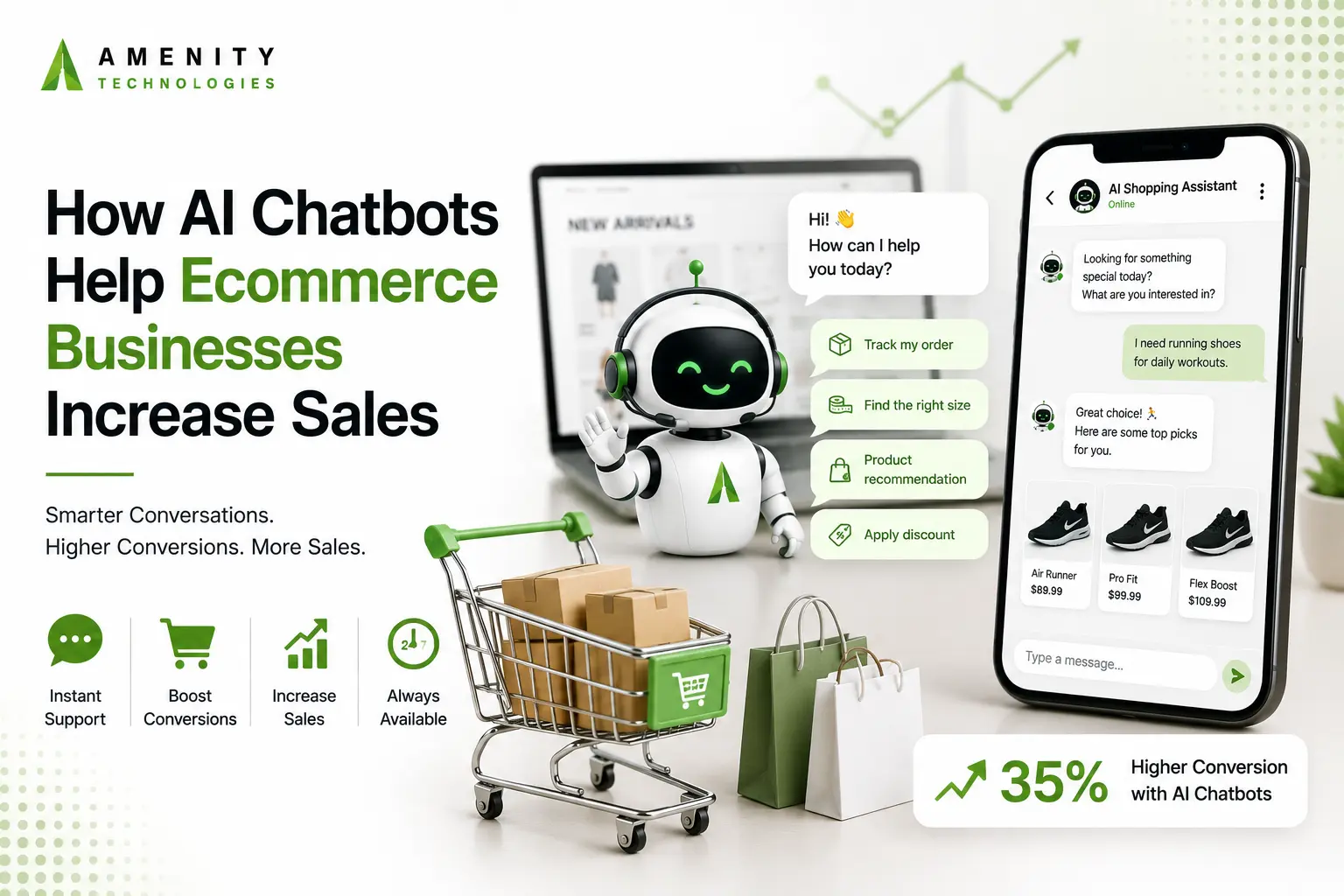
An online storefront isn’t just a static catalog anymore; it’s a real-time conversation. Today’s shoppers move fast. They expect instant answers, accurate recommendations, and zero friction from product discovery to checkout.
If a buyer runs into a minor hesitation like sizing doubts, vague shipping times, or fabric details, a two-minute delay usually means a lost sale and an abandoned cart. That’s where an AI chatbot for ecommerce acts as a core revenue engine rather than just a support widget.
Modern conversational setups go beyond basic automated scripts. They function as digital sales associates, cross-selling tools, and 24/7 support reps that keep buyers moving through the funnel. That’s where partnering with a leading ecommerce chatbot development company and developing a tailored chatbot solution will be a strategic move.
4 Strategic Ways AI Chatbots Accelerate Ecommerce Revenue
1. Bridging the Intent Gap with Guided Product Discovery
Most online store searches aren’t precise. If someone types “lightweight jacket for rainy spring hikes,” a standard search bar gets confused and shows zero results or completely wrong items.
Advanced AI chatbot development for e-commerce fixes this simple problem. Instead of hunting for exact words, the bot actually gets what the buyer is looking for. It digs through your entire inventory and pulls out the right picks almost instantly.
- No More Overwhelming Menus: Shoppers hate clicking through 20 pages of inventory. The bot asks two simple questions, cuts out the noise, and shows them what fits.
- Better Add-Ons at Checkout: The bot checks out what the customer is looking at and what’s in their cart, then suggests items that make sense together. That pushes up your Average Order Value (AOV) without annoying the customer.
2. Eliminating Friction at High-Risk Checkout Drop-off Points
Cart abandonment drains revenue at the worst possible moment, right when a buyer is ready to pay. Most people drop off because of surprise shipping costs, vague return policies, or a quick question no one is around to answer.
Bringing in a dedicated customer support AI chatbot development service for ecommerce addresses those specific friction points before you lose the sale.
The bot answers questions about delivery windows, warranties, and return terms right on the checkout page, keeping shoppers focused on completing their order. If someone stalls on payment or moves to close the tab, the bot intervenes with immediate help, a quick note on free shipping thresholds, or a promo code. With native in-chat checkout, customers can select sizes, apply discounts, and pay without leaving the conversation, cutting out unnecessary steps and locking in orders faster.
3. Scaling 24/7 Sales Operations Without Inflating Support Costs
Running an international store means orders roll in at all hours, but staffing support around the clock gets expensive fast. AI chatbot for ecommerce stores customer supports takes over that baseline workload by automatically answering up to 80% of routine tickets. It clears out endless “Where is my order?” (WISMO) messages by pulling tracking data straight from shipping carriers in real time.
When a problem actually needs a manager like a tricky refund or a VIP account issue, the bot sends the full context over to a real agent so the buyer never has to start their story over from scratch.
4. Turning Abandoned Browsing Sessions into Conversions
Email cart recovery is largely broken. Open rates are miserable, and half your messages land in spam or promotion tabs anyway. Reaching shoppers through WhatsApp, SMS, or Messenger bypasses that clutter completely, putting you directly in front of buyers where they actually read their messages.
When a logged-in user walks away from their cart, an integrated AI chatbot development service for e-commerce kicks off an immediate, real-time check-in. Instead of sending a useless “forgot something?” email, the bot starts a real dialogue: “Hey Alex, those size 10 trail runners in your cart are down to the last few pairs. Want me to hold them or answer any questions real quick?” Swapping passive broadcasts for direct, useful dialogue saves sales that traditional email campaigns miss every single day.
Choosing the Right Engineering Partner
Deploying a conversational system that moves the needle on revenue takes serious engineering. It means setting up low-latency vector databases, syncing live inventory feeds, and building hard boundaries so your system never hallucinates prices or misinterprets store policies.
A generic wrapper around a public API won’t cut it. You need specialized teams that write custom data pipelines, fine-tune multi-modal search, and build user flows designed specifically to drive checkout conversions.
For online brands scaling across markets, working with established ecommerce chatbot development company in India unlocks top-tier AI technical capabilities, faster deployment cycles, and lower overhead. Getting the underlying architecture right from day one ensures you launch an enterprise-grade conversational platform built for long-term ROI.
Practical Implementation Steps for Maximum Sales Impact
Rolling out an AI sales assistant isn’t about slapping a widget on your store and hoping for the best. To actually drive revenue, execute these steps in order:
Clean Your Knowledge Base First
Bad data produces bad customer answers. Before connecting your catalog, clean up product specs, sizing grids, return windows, and shipping rules. When the underlying data is accurate, the bot won’t invent policies or recommend out-of-stock sizes.
Deploy on High-Intent Touchpoints
Skip the homepage for now. Put the assistant right on high-value Product Detail Pages (PDPs) and cart checkout drawers. That is where shoppers hesitate, ask deal-breaking questions, and drop off. Solving doubts at these exact points directly saves conversions.
Audit Real Logs Weekly
Read through actual chat transcripts every single week. Look for missing product answers, weird phrasing, or dead-end interactions. Use those insights to patch knowledge gaps and smooth out friction points in the user journey.
Build Clear Human Escalations
Don’t trap customers in endless loops. If the bot hits a wall or senses a frustrated customer, hand off the chat to a live support rep instantly with full context attached.
When you treat your AI assistant like an engineered sales asset rather than a flashy support add-on, it turns into a 24/7 revenue driver.
Conclusion: Turning Conversational AI into Your Primary Revenue Driver
If a shopper can’t get a straight answer on shipping or sizing in five seconds, they close the tab. Simple as that. Static product pages and contact forms just create friction, giving people a reason to walk away before reaching the checkout page.
A well-built AI assistant fixes this by turning passive site visits into active conversations. It steps in right when buyers stall, answering specific questions, suggesting the right items, and pulling lost sales back over the line.
Building a system that actually hits your metrics takes more than plugging in a standard API. You need tight catalog syncs, quick response times, and clear rules so the bot stays on script.
At Amenity Technologies, we design and deploy custom AI sales assistants built around your catalog, tech stack, and margin goals. If you are ready to stop losing high-intent traffic to slow support, let’s talk with Amenity Technologies about building an AI system tailored to your store.
FAQs
Q.1. How does an AI chatbot directly increase ecommerce conversion rates?
A: The chatbot answers product questions instantly, recommends personalized items based on browsing behavior, and resolves hesitations right on the checkout page before buyers abandon their carts.
Q.2. Will an AI chatbot accidentally invent prices or promise wrong discount codes?
A: No. Enterprise AI chatbots operate with strict guardrails connected directly to your single source of truth i.e., your live product catalog and pricing database.
Q.3. Why partner with Amenity Technologies over generic third-party chatbot plugins?
A: Contact our engineering team to see how custom-built RAG architectures out-perform template plugins in security, inventory sync, and conversion rate.