



Keeping up with cryptocurrency markets is rarely a matter of opening one website and finding everything you need.
A project update might appear on one channel. Market commentary appears somewhere else. A YouTube creator publishes analysis that never reaches traditional news feeds. NFT activity follows an entirely different trail. Useful information exists, but it is scattered across platforms, formats, and communities.
CryptoHype was built around a simple idea: collect those updates automatically instead of expecting users to hunt for them manually.
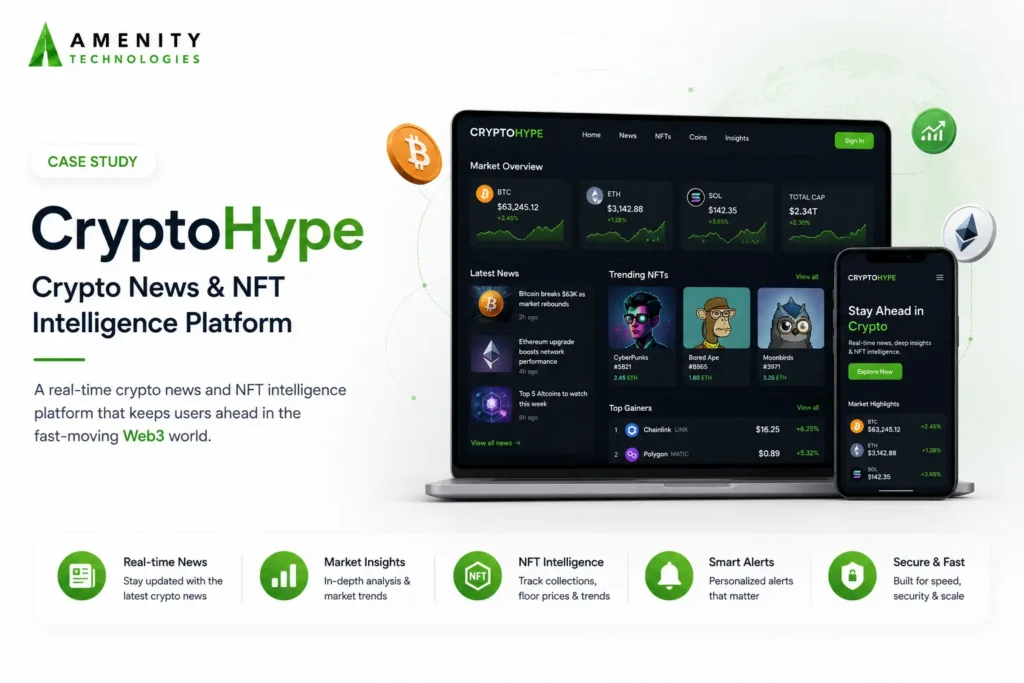
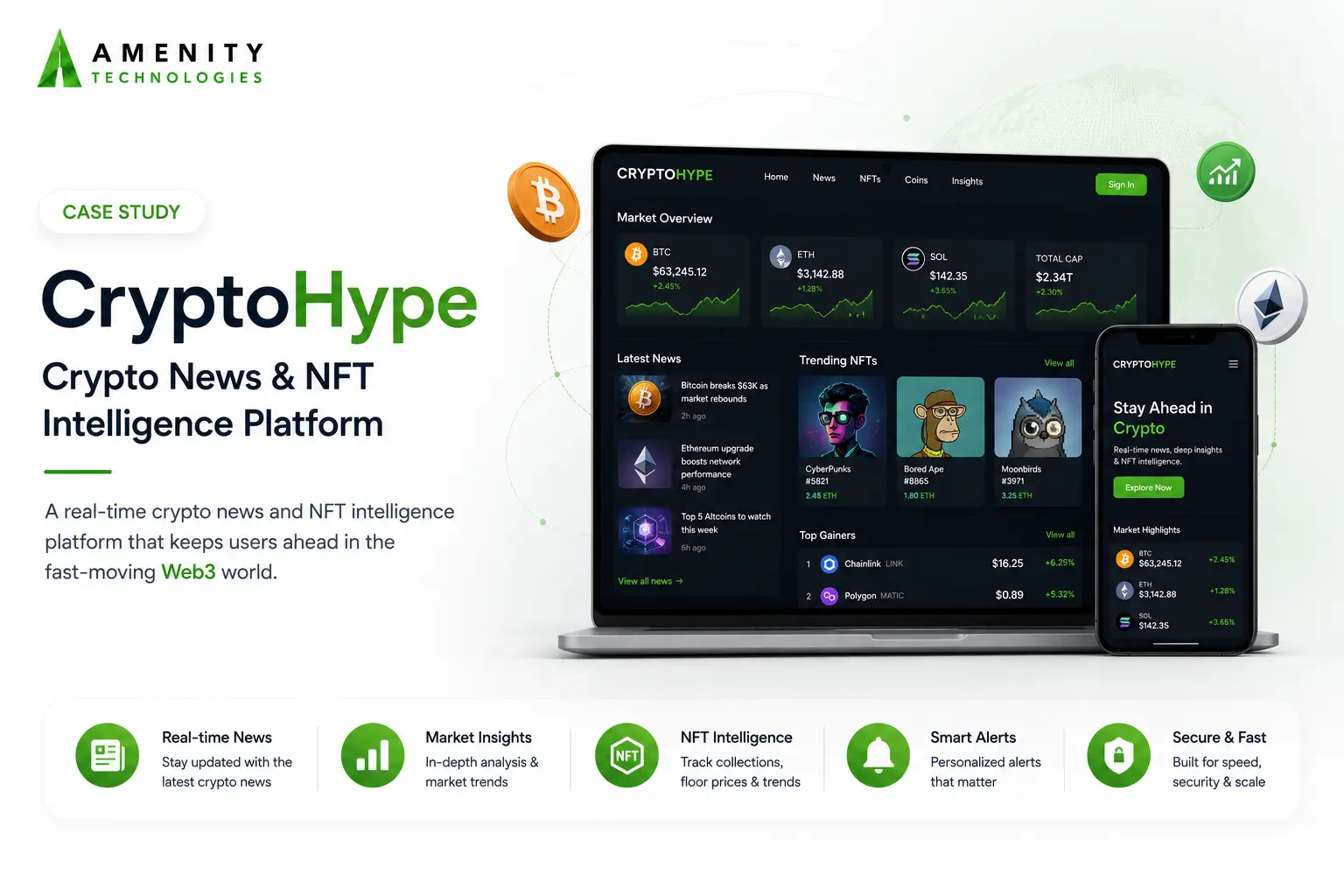
The platform continuously gathers information from selected cryptocurrency channels and YouTube sources, making it available through a centralized experience. This crypto news aggregation platform case study highlights how a scheduled collection framework was used to create a practical cryptocurrency news aggregator capable of surfacing market information and NFT insights from one location.
Strategic Architecture Blueprint and Ingestion Topologies
CryptoHype’s platform was doing two very different jobs at the same time.
One side was responsible for continuously collecting information from selected cryptocurrency channels and YouTube sources. The other side was responsible for presenting that information to users in a way that felt organized rather than overwhelming.
Keeping those responsibilities together would have made the system challenging to maintain as new sources were added.
The collection workflows changed more frequently than the interface itself. Treating them as separate concerns made updates easier whenever new sources needed to be introduced.
Overcoming High-Frequency Feed Fragmentation
Every source published information differently. Some contained structured content, while others required additional cleanup before becoming useful inside the application. Incoming records were standardized before being stored and displayed.
Streamlining the Aggregate Discovery Experience
Users were not visiting the platform to browse pages. They were looking for information. Next.js and React components were used to keep news streams, updates, and content discovery easy to follow as new records entered the system.
Maintaining Ingestion Integrity with Background Worker Queues
Collecting information from multiple sources is rarely a one-time task. New content appears throughout the day, which means the collection process needs to keep running long after a user closes the browser.
That work was handled separately from normal application activity. CryptoHype relied on scheduled collection jobs to gather updates from selected cryptocurrency channels and YouTube sources at regular intervals. Running those jobs directly through the web application would have mixed two very different responsibilities together.
Data collection was handled outside the main application, so users were not affected whenever retrieval jobs were running. The crypto data aggregation platform remained responsive while backend workers managed incoming data continuously.
Scheduled Event Loops and Memory Storage
The backend application was built using Python and Django, while Celery handled recurring collection tasks. Redis coordinated task execution and managed temporary data across scheduled jobs.
Indexing Decentralized Non-Fungible Tokens
The platform wasn’t limited to news collection alone. It also retrieved NFT token information for display within the application, giving users access to NFT analytics platform functionality alongside broader market updates. Over time, that also helped position the product as an NFT tracking platform rather than a news-only destination.
Designing Resilient Scraper Pipelines for Scalable Capture
One thing rarely stays consistent in content collection projects: the sources themselves.
A channel that works today may change its structure next month. A page layout gets updated. A content format changes. Small adjustments like these can interrupt collection workflows if too many parts of the application depend on the same logic.
The collection layer was designed with that reality in mind.
When a source changed its structure, only the related collection workflow needed attention instead of the entire platform. That made updates quicker to handle and prevented small source-level changes from creating unnecessary work elsewhere.
For a platform operating as both a crypto news scraping tool and a cryptocurrency news aggregator, that flexibility became important because source formats rarely stayed the same for long.
Optimizing Render Cycles for Volatile Market Data
Crypto information has a habit of piling up quickly.
A few updates arrive in the morning. More appear throughout the day. Add NFT activity on top of that and the amount of information users need to sort through grows fast.
The challenge wasn’t collecting the data. It was presenting it in a way that remained easy to follow once the volume increased.
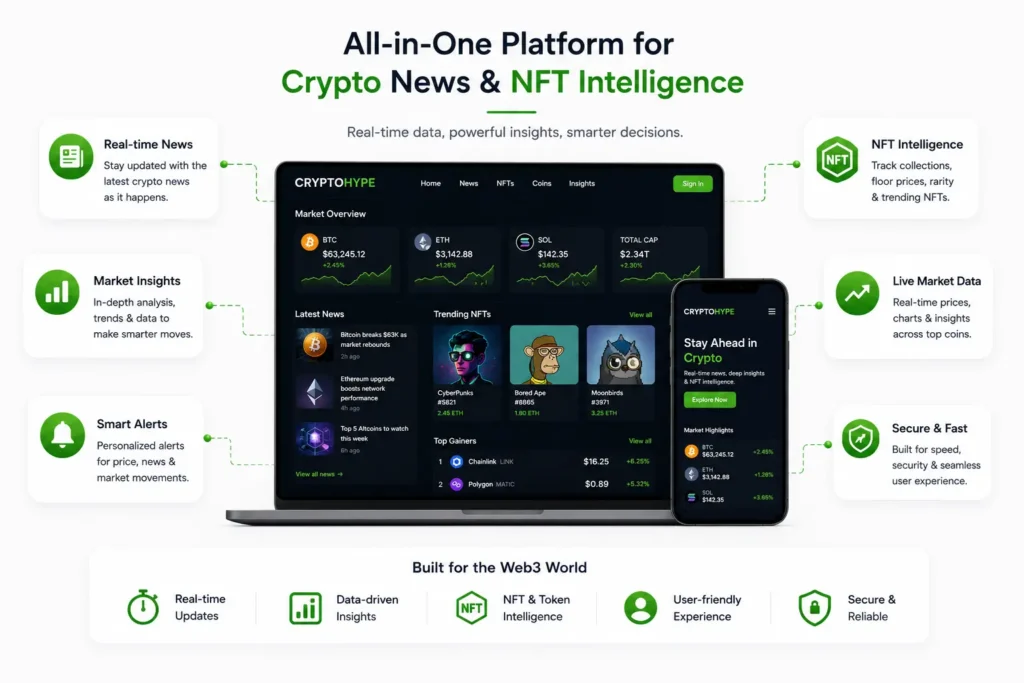
Next.js and React formed the frontend foundation for that experience. News updates, channel activity, and NFT information were surfaced through a single interface rather than scattered across separate sections of the application.
Over time, that made the platform feel less like a collection of feeds and more like a real-time crypto news platform built around continuous discovery.
Elevating User Retention Through Targeted Metric Dashboards
Most people don’t visit a platform just to collect more information. They’re usually trying to answer a question. Which projects are being discussed? Which NFT collections are active? What developments are attracting attention across the channels they follow?
Raw content rarely answers those questions on its own.
CryptoHype combined news collection with NFT data so users could review different types of information from one place instead of moving between multiple sources.
Users could monitor:
- Cryptocurrency updates collected from selected channels
- News and commentary referenced through YouTube content
- NFT token information and related activity
- Emerging topics appearing across monitored sources
That combination helped the platform evolve beyond a simple cryptocurrency news aggregator and into a crypto intelligence platform where information could be explored in context rather than consumed in isolation.
Production Performance and Operational Results
Some improvements are easy to measure. Others become obvious through day-to-day use.
Before information reaches users, it first needs to be discovered, collected, and organized. CryptoHype reduced much of that manual effort by bringing cryptocurrency updates and NFT-related information into a single environment.
Users were not limited to a single type of information. A market update might appear alongside NFT-related data during the same session. Someone following cryptocurrency news could move into token activity without opening another tool or searching through additional sources.
That made the platform feel less fragmented. New records continued entering the system through scheduled collection jobs, but the experience on the frontend remained familiar. During the crypto web app development process, a key focus was keeping the user journey consistent whether someone was checking news updates, channel activity, or NFT information.
Mitigating Rate Limits and Ingestion Noise
Content collection projects rarely stay unchanged for long.
Sources publish at different frequencies. Some become more active than others. New information appears throughout the day, while older records quickly lose relevance. Managing those collection workflows required more than simply running scheduled jobs.
Docker, Nginx, Gunicorn, and AWS EC2 supported deployment, while dedicated background workers handled scheduled cryptocurrency and YouTube data collection workflows.
Build Your Custom Data Ingestion Pipeline With Us
Not every data collection project starts with the same requirements.
Some teams need to monitor industry-specific news sources. Others are looking for recurring collection workflows, analytics dashboards, or applications that bring information together from multiple channels into a single environment.
CryptoHype followed a similar path. Over time, the platform became more than a place to collect updates.
News from selected crypto channels, information from YouTube sources, and NFT-related data all started flowing into the same environment. Instead of piecing information together manually, users could follow developments from one place and spend more time interpreting what they were seeing.
Projects like this often begin with a simple requirement: gather information from multiple sources. The real work starts when that information needs to remain organized, searchable, and easy to access as the platform grows.
If you’re exploring a similar product idea, we’d be happy to discuss the technical approach, the collection workflows, and the infrastructure required to support it.
Talk to our expert team and start planning a platform built around the way your users actually consume information.
FAQs
Q.1. How does the scheduling engine keep the platform running smoothly?
A: Data collection runs in the background through scheduled tasks. This keeps scraping jobs separate from normal platform activity, helping maintain a smooth user experience.
Q.2. What infrastructure supports recurring content collection workflows?
A: The platform combines Python Django, Celery, and Redis to coordinate scheduled collection jobs. Application services are deployed using Docker containers on AWS EC2, with Nginx and Gunicorn supporting the web-serving environment.
Q.3. Can the platform be extended to additional crypto content sources?
A: Yes. The collection layer was built around scheduled source ingestion, making it possible to introduce additional cryptocurrency channels or content sources as platform requirements evolve.