
 ALL ARTICLES



Code generation tools have become part of many development workflows. Engineers use them to build APIs, write utility functions, generate tests, and accelerate repetitive work that previously consumed valuable development time.
The speed is useful. The assumption that generated code is production-ready is where problems start to appear.
A generated function may compile successfully while introducing a security weakness, an inefficient query, or a dependency nobody intended to add. The issue is rarely that the code was produced by AI. The issue is accepting it without the same scrutiny applied to any other contribution.
As AI code generation is slowly becoming a part of modern software development, review and validation remain critical before deployment.
In this post, we explore how to review AI-generated code securely.
Why AI-Generated Code Still Requires Human Review
Generated code often earns trust too quickly.
A developer asks for a database query, an authentication flow, or a utility function. The output looks reasonable, compiles without errors, and solves the immediate problem. The temptation is to move on.
That is usually where review becomes most valuable. The code may not match existing design patterns. A validation step might be missing. An API call could expose information that should remain internal. None of those issues are obvious from a successful build alone.
The goal of code review for AI-generated code is not to question where the code came from. It is to verify that the implementation behaves the way the team expects before it reaches production.
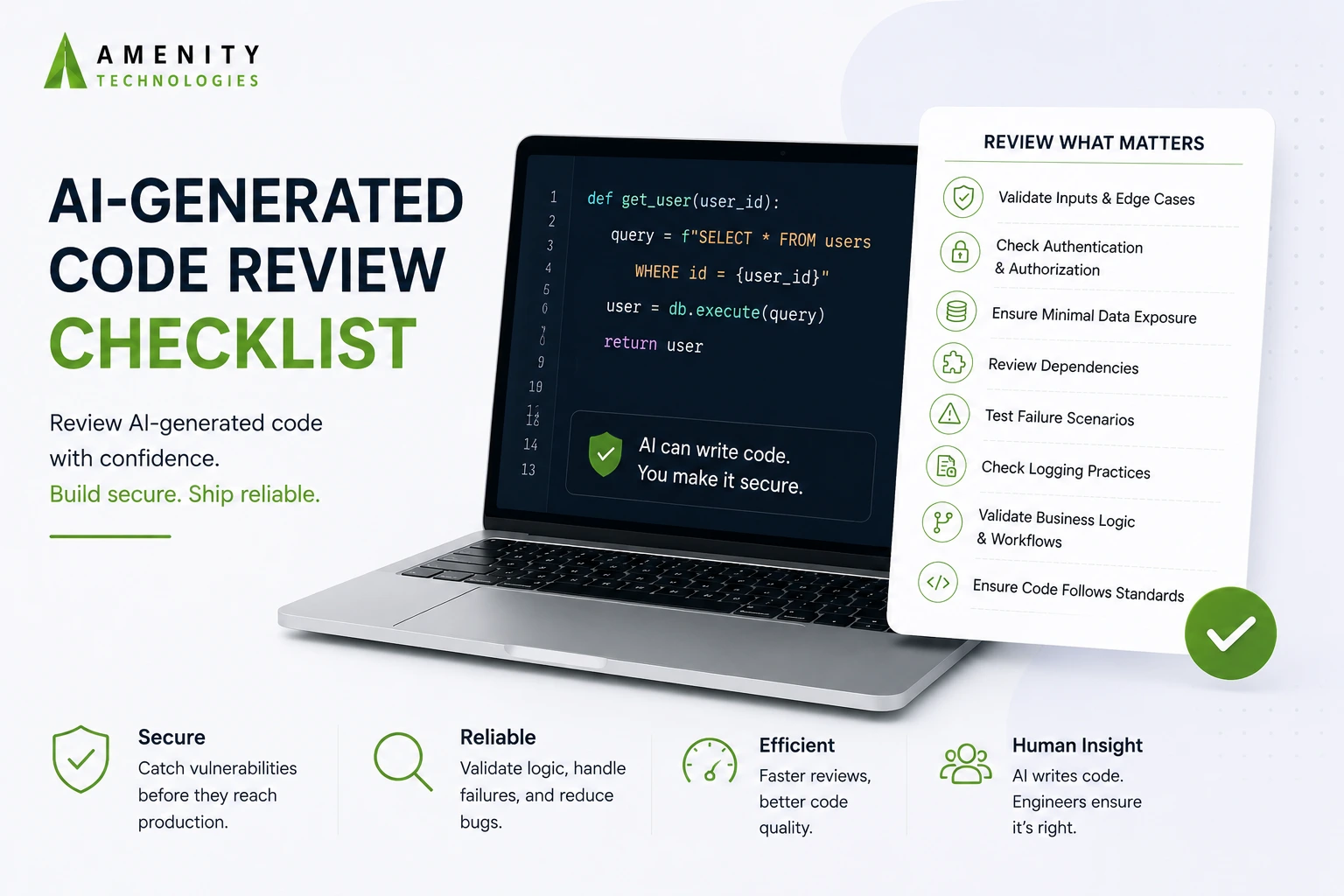
AI-Generated Code Review Checklist for Secure Software Development
The following checks come from situations that appear regularly during code reviews. Most are not obvious until somebody takes a second look.
What Happens When Input Doesn’t Match Expectations?
Generated code is usually written around expected input. The more interesting question is what happens when requests arrive in the wrong format, contain unexpected values, or are missing required fields entirely. Production traffic rarely behaves like sample data.
Are Permissions Being Checked Correctly?
It is surprisingly common to find endpoints that work exactly as intended while exposing actions to the wrong users. Authentication may be present, yet authorization rules are either incomplete or missing from critical parts of the workflow.
Is the Application Returning More Data Than Necessary?
A database operation can appear correct and still expose information that should remain private. During review, attention often shifts from whether data is returned to whether the application should be returning it at all.
Why Was This Dependency Added?
One review comment appears more often than many developers expect: “Why was this dependency added?” AI code generation can introduce libraries that solve small problems while creating maintenance, security, or licensing concerns later.
How Does the Code Behave During Failures?
Things usually start breaking when a service stops responding or a request never comes back. Generated code does not always account for those situations, so it is worth checking what happens when external dependencies fail unexpectedly.
Could Logging Expose Sensitive Information?
Logging is useful right up until sensitive information starts appearing inside it. Credentials, tokens, customer identifiers, and internal system details have a habit of slipping into logs when nobody is specifically looking for them. Many AI-generated code security risks originate from small oversights like these rather than obvious vulnerabilities.
What Happens Outside the Expected Workflow?
A surprising number of review comments start with the same observation: “What happens if somebody does this instead?” The original request may describe one workflow, but real users rarely follow instructions perfectly. Unexpected navigation paths, repeated actions, and unusual inputs often expose weaknesses that never appeared during initial testing.
Does the Implementation Match Existing Standards?
Every team develops patterns over time. File structures become familiar. Naming conventions settle into place. Architectural decisions start following a rhythm. Generated code occasionally stands out because it ignores those patterns entirely. Nothing may be technically wrong, yet the implementation creates maintenance friction that future developers will eventually inherit. Reviewing generated code against established secure coding practices helps teams maintain consistency while reducing avoidable implementation risks.
Validating Logic, Dependencies, and Third-Party Components
Some of the most expensive bugs are not security issues; they’re logic ones.
A calculation behaves differently from the business rule it was meant to support. A discount applies when it shouldn’t. A workflow skips a validation step because the generated implementation interpreted the requirement differently than the team intended.
Those problems rarely appear in syntax checks.
When the Requirement and the Code Mean Different Things
Generated code can solve the prompt it receives while missing the intent behind it. During review, compare the implementation against the original requirement rather than assuming both represent the same thing.
A Dependency Solved One Problem and Added Another
Third-party packages can solve a problem quickly, but they also become part of the application long after the code is written. Before adding one, it is worth considering the maintenance, licensing, and security responsibilities that come with it.
Passing Tests Do Not Always Confirm Correct Behavior
A test suite can pass without confirming that the code reflects how the business process actually works. As AI-assisted software development becomes more common, that gap is becoming easier to overlook during reviews. Producing secure AI-generated code requires more than passing tests; it also requires validating whether the implementation behaves correctly under real operating conditions.
Testing AI-Generated Code Under Real Conditions
Many bugs stay hidden until somebody uses the software differently than expected.
1. The Requirement Wasn’t the Same as the Outcome
The feature looked finished. The code compiled. Then somebody compared the result with the original requirement and noticed the two weren’t actually saying the same thing.
2. One Strange Request Changed Everything
Most test data is predictable. Real users are not. An incomplete form submission or an unusual payload is often enough to expose behavior nobody noticed during development.
3. The Problem Appeared After Something Else Failed
The application worked perfectly while every dependency responded on time. The real questions started when an API slowed down or a service stopped responding altogether.
4. Nobody Noticed Until Real Usage Began
Some issues don’t appear during development because the conditions simply don’t exist yet. Larger datasets, repeated requests, and everyday user activity tend to uncover them later.
Building Code Review Workflows Around AI-Assisted Software Development
AI-assisted software development has changed where teams spend their time. Writing code is often faster. Reviewing it is not.
The Source Matters Less Than the Change
Most reviewers care less about how the code was created and more about whether it belongs in the codebase.
Faster Output Creates More Review Work
When code arrives faster, review queues grow faster too. The bottleneck often shifts from development to validation.
Standards Still Apply
The code arrived faster. That didn’t change what reviewers expected from it before approval.
Assumptions Deserve a Second Look
The interesting comments often appear when somebody questions a decision that seemed reasonable at first glance.
Common Mistakes Teams Make During Code Validation
The same review issues usually appear regardless of whether the code was written manually or produced through AI code generation.
- The feature worked, so the review stopped.
- The code was checked, but the dependency wasn’t.
- One successful test created too much confidence.
- Nobody tried an unusual user workflow.
- Clean code was mistaken for correct code.
Strengthen Your AI Development Workflow
Generated code can save hours of development time. Reviewing it properly can save weeks of troubleshooting later.
The teams that get the most value from AI-assisted software development are usually the ones that slow down long enough to validate what they’re shipping.
If you are refining your review process or evaluating secure development workflows, Amenity Technologies can help.
FAQs
Q.1. Should generated code go through the same review process as manually written code?
A: Absolutely. Code origin should not change review standards or deployment requirements.
Q.2. What is the biggest risk when using AI code generation?
A: Trusting the output too quickly. Many issues appear when generated code is accepted without proper validation. That is why AI-generated code requires thorough review, testing, and security checks before deployment.
Q.3. How do teams build secure AI-generated code workflows?
A: By combining human review, automated testing, dependency checks, and secure coding practices before deployment.