
 ALL ARTICLES



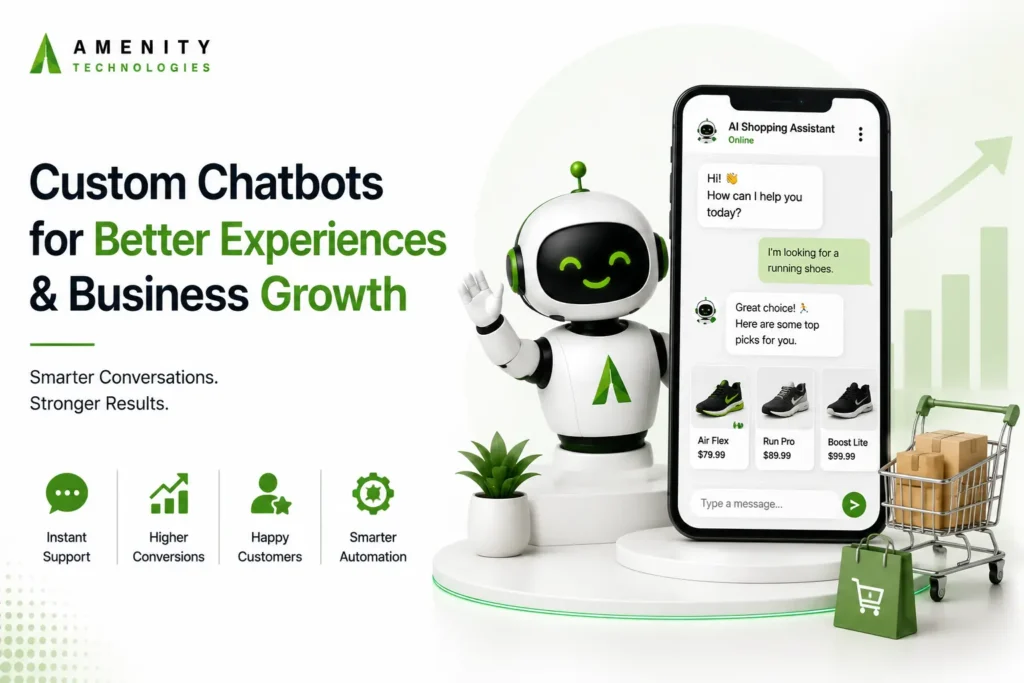
Most companies treat customer interactions as a basic ticketing queue. Standard, rules-based pop-ups frustrate users by failing the moment a question strays from a pre-written script. When a basic AI chat bot cannot decipher simple intent, customers abandon their carts, support backlogs grow, and real revenue slips away. Moving past these limitations requires deploying highly specialized AI chatbot features designed for deep operational context.
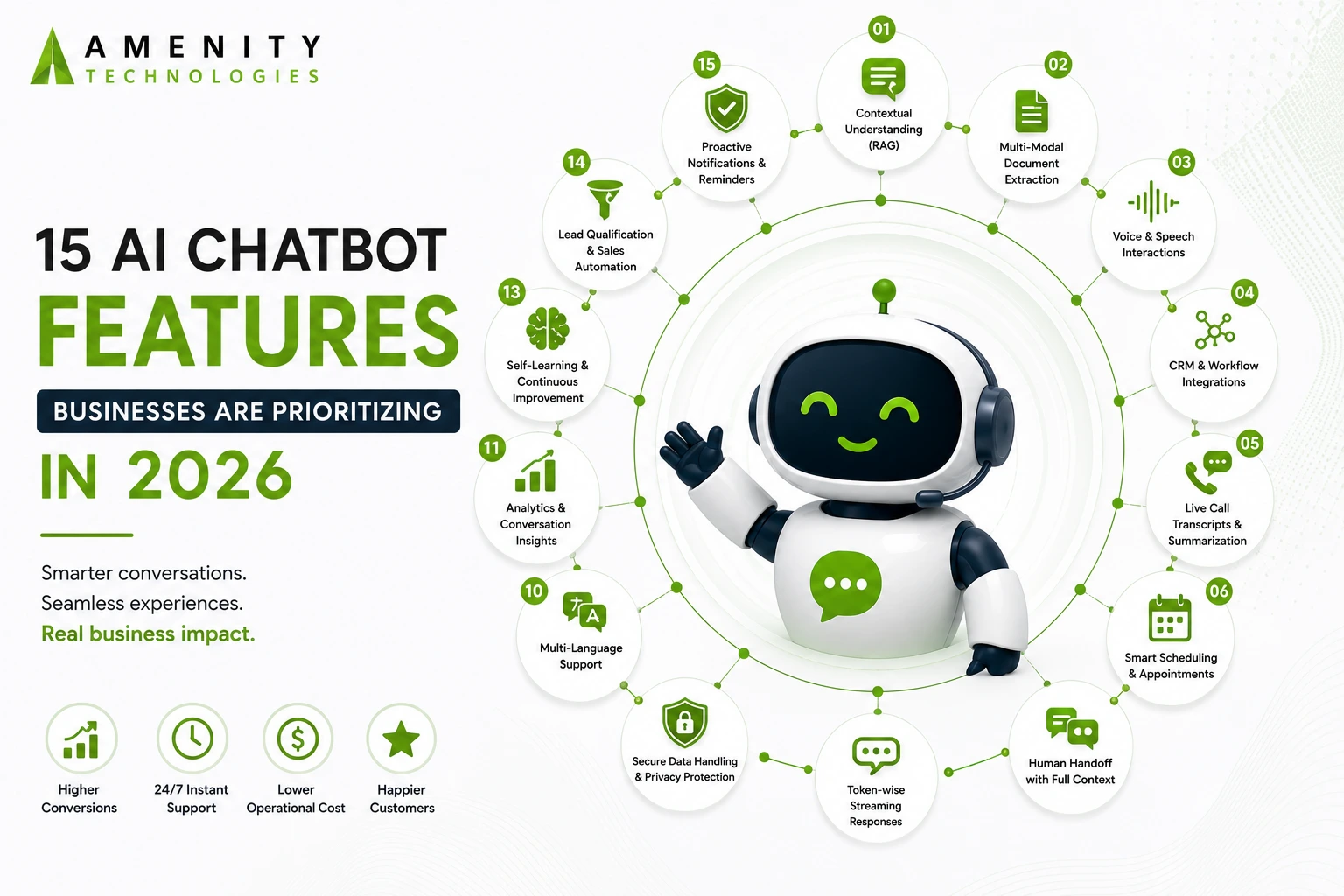
Fixing this problem means looking past simple, keyword-matching assistants and focusing on high-performance enterprise chatbot solutions. In 2026, building a resilient business requires deploying specific, future-ready AI chatbot features that can think, adapt, and act across your entire software ecosystem. When done right, this operational shift turns a standard overhead cost into a continuous, automated engine for keeping customers engaged and protecting your long-term margins.
List of the Core Capabilities of Next-Generation Intelligent Chatbots
Deploying conversational AI requires a foundational shift in how systems handle complex corporate knowledge. Modern consumer interactions demand deep retrieval capabilities and absolute context verification to eliminate costly operational errors. Enterprise software must read between the lines, transforming unstructured data fields into predictable corporate intelligence that optimizes daily workflows.
1. Contextual Low-Latency RAG
Traditional search tools fail because they look for exact word matches, completely missing what a human actually means. Modern intelligent chatbots use advanced RAG frameworks to look deeper into company files and product logs. By running these searches through secure tools like Supabase and pgvector, the software handles thousands of detailed property listings or complex technical FAQs instantly, giving accurate answers without long delays or strange hallucinations.
2. Multi-Modal Document Extraction
Modern business requires handling messy, unstructured files like invoices, receipts, and intake paperwork. Advanced conversational AI systems now feature built-in document intelligence that can instantly scan an uploaded image or PDF, categorize the document type, and pull out specific data fields without needing a human to type them in manually.
3. Continuous Wearable and IoT Data Syncing
In specialized industries, the most valuable conversational tools connect directly to real-world devices. By securely linking live user metrics from platforms like Fitbit or Apple Health straight into the language model context, the bot can check real-time vitals, evaluate historical patterns, and send out proactive wellness reminders or health alerts exactly when they matter most.
4. Real-Time Low-Latency Voice Synthesis
Voice-driven chatbot automation has finally moved past those slow, frustrating phone menus that everyone tries to skip. By blending specialized voice engines like Vapi, RetellAI, and ElevenLabs, modern systems can handle fluid, human-sounding phone calls. This allows businesses to manage rapid incoming support routing and execute outbound lead qualification campaigns with almost zero delay.
5. Multi-System CRM and Workflow Synchronization
An AI customer support tool shouldn’t work in a silo. To drive real growth, it needs to talk directly to your operational software. Using automated workflow systems like N8N, a custom AI chat bot can connect with specialized platforms like Jobber or internal ERPs. This means booking an emergency repair appointment, dispatching a local technician, or updating customer records happens instantly behind the scenes.
6. Live Call Transcripts and Summarization
When you automate phone operations, you cannot afford to lose visibility. Advanced voice systems show managers a live, running text transcript on a central dashboard while an automated call is actively happening. The moment the call ends, the backend automatically generates a concise summary, files the audio recording, and logs structured data points for human review.
7. Interactive Practice and Personality Coding
Traditional training rarely prepares teams for unpredictable customer conversations. AI-driven practice systems simulate hesitant buyers, difficult clients, and high-pressure scenarios in real time, allowing employees to improve communication and response handling before interacting with actual customers.
8. Handling Schedules Without Human Steps
Many businesses still waste time manually coordinating appointments after customer inquiries. Modern scheduling systems can identify booking requests during conversations, check availability instantly, confirm appointments, and send reminders automatically without requiring continuous manual coordination.
9. Token-Wise Streamed Responses
Waiting around for a system to process a long response completely ruins the flow of a digital interaction. Modern chat systems fix this by using token-wise streaming, which displays text word by word in real time on the screen. This approach eliminates the awkward pause, keeping the conversation feeling natural, energetic, and engaging for the user.
10. Secure Identity Checks for Sensitive Data
You can’t hand out account details or private records to just anyone who asks. High-security setups use verified OAuth layers to check who the user is before the bot reveals a single piece of restricted data. This keeps balance sheets, personal profiles, and backend files completely safe, giving customers the confidence that their data isn’t leaking.
11. Tailoring the Engine to Your Niche Text
Generic bots give generic answers because they lack the background context of your specific industry. A dependable system relies on training OpenAI GPT models directly on your real property listings, actual technical manuals, and historical service notes. This highly focused training ensures the software speaks your language, stays accurate, and stops making wild guesses.
12. Capturing Leads Across Every Channel
A well-designed chat bot stays connected to your buyers no matter where they show up. Whether someone drops a message on your desktop site, opens your mobile app, or calls in from a smartphone, the system tracks their intent the same way. It asks a few natural, qualifying questions to see what they are looking for, structures their needs, and passes their info directly into your sales pipeline without losing a single prospect.
13. Natural Voices and Fast Translation
To work well for a diverse customer base, modern voice systems let you switch vocal styles, regional tones, and full languages right in the middle of a call. This type of instant localization removes language barriers entirely, puts the caller at ease, and lets growing businesses expand into new international markets without needing a massive, multilingual call center team on the payroll.
14. Stable, Containerized System Backends
If thousands of people try to use an application at the exact same moment, basic web tools will crash. Building a stable conversational system requires using fast, clean Python code like FastAPI, wrapped tightly inside Docker containers. From there, automated GitHub Actions push the code straight to secure cloud setups like AWS or Azure Container Apps, keeping everything fast and running smoothly during heavy traffic spikes.
15. Proactive Alerting and Live-Agent Handovers
A mature conversational setup knows its own limits. The software can monitor user behavior to reach out proactively after a period of inactivity or a system alert, but it also tracks user frustration in real time. The moment a conversation gets too complex, it triggers a smooth, instant handoff to a live human representative.
Measuring What Matter: Real Business Returns
Putting time and money into advanced conversational software only makes sense if it leaves your business in a better position. Forget about vanity numbers like how many messages the bot typed this month that doesn’t pay the bills. Look at the real operational shifts instead: how many hours your desk staff saved, how much you cut down your support backlogs, and how many new leads actually made it through your automated funnels. Knowing these variables before writing code keeps your development team focused on the areas where you are actually losing money.
If you want a clear look at what these changes mean for your operational overhead before making a major decision, using targeted tools like our AI voice bot ROI calculator makes the process simple.
You can plug in your current daily call volumes, average handling times, and administrative costs to see a direct, realistic projection of your savings. This helps take the guesswork out of upgrading your setup, changing automation from an experimental tech expense into a clear strategy for corporate profitability.
How to Build and Deploy Production-Ready Systems
Businesses looking for stronger infrastructure planning and scalable deployment often turn to generative AI consulting services for long-term operational support.
- Production-ready AI systems require more than generic API integrations.
- Legacy tools and privacy requirements often need custom infrastructure planning.
- Long-term scalability depends on how well automation fits existing workflows.
- Secure architecture and stable performance become critical as operations grow.
Smart Steps for Long-Term System Success
Good automation usually starts by solving one operational problem properly instead of trying to overhaul everything at once. Businesses also need systems that understand real customer intent, not just exact keywords or scripted inputs.
Security matters just as much. Keeping sensitive operational data inside private infrastructure gives businesses far more long-term control as automation expands.
At Amenity Technologies, we help businesses build secure, scalable AI systems designed around real operational workflows instead of generic software templates.
FAQs
Q.1. How do these modern AI chatbots differ from the old chat pop-ups that just give error messages?
A: Old chatbots rely on rigid keyword rules, if a customer doesn’t type an exact phrase, the system breaks. Modern intelligent chatbots understand context, intent, and messy, casual human language. They don’t need perfect phrasing to give a clear, accurate answer.
Q.2. Can a business safely test its sales or support teams using these advanced chat tools?
A: Yes. Beyond talking to customers, the software can be set up to simulate distinct buyer personas, strict negotiators, or high-stress customer complaints. This gives your staff a safe sandbox to practice pitches and handle tough objections while getting instant performance feedback.
Q.3. How can we estimate our potential cost savings before spending money on custom AI development?
A: You can skip the guesswork entirely by evaluating your current metrics before writing any code. Tools like our AI voice bot ROI calculator let you plug in your actual daily call volumes and administrative costs to see a realistic, data-driven projection of your savings.