




Generating leads is no longer the challenging part of B2B growth. The actual challenge is converting interest into meaningful sales conversations. Many organizations see strong Top of Funnel (ToFu) performance but struggle to move prospects from curiosity to qualification.
The company in this case is a U.S.-based SaaS provider offering compliance automation tools for regulated industries. Their targeted audience is usually operations leaders, CISOs, and IT directors. The sales process is consultative and it requires careful decision-making.
Marketing was doing its job. Campaigns were running. Organic traffic was steady. Webinar signups were healthy. Demo requests arrived daily.
Yet sales leadership kept asking the same question during weekly meetings:
Why do so many leads stall before the meaningful conversations begin?
Something was missing between “interest” and “intent.” That gap became the focus of this project.
Let’s get straight into this case study and understand the problems faced by the firm, how they dealt with them using Amenity Technologies’s AI lead bot, and the measurable outcomes that followed.
The Unpleasant Situation: High Traffic Volume, Low Intent
Inbound leads looked promising on dashboards. On closer inspection, they told a different story.
Some prospects downloaded resources without ever replying to follow-ups. Others booked demos but canceled at the last minute. A noticeable number admitted during calls that they were “just exploring options.” This indicated a lack of sales readiness which was one of the primary objectives of the firm.
Sales representatives were trying to figure out prospects’ needs instead of talking about solutions. Marketing felt pressure to drive more MQLs (Marketing Qualified Leads). Sales felt pressure to close more deals. Effort was high, but top-of-funnel efficiency was low.
The issue was clarity. When every visitor fills out the same form, everyone appears equally qualified. In truth, buying intent varies significantly.
The Core Problem: No Visibility into Buying Readiness
The company relied heavily on traditional forms on pricing pages and gated assets, such as whitepapers and webinars. The forms collected job title, company name, and email address.
That information helped categorize accounts. But, it did not explain the urgency.
Two visitors might both work in finance at mid-sized companies. One might be preparing for an audit next quarter. The other might simply be reading about industry trends.
From the CRM’s perspective, they looked identical. And the sales teams discovered that difference only after outreach.
That particular lag led to inefficiency and missed timing opportunities.
The Shift Toward Conversational Qualification
Rather than redesigning landing pages or adding more required fields, we introduced a conversational layer at key decision points. It helped engage the visitors
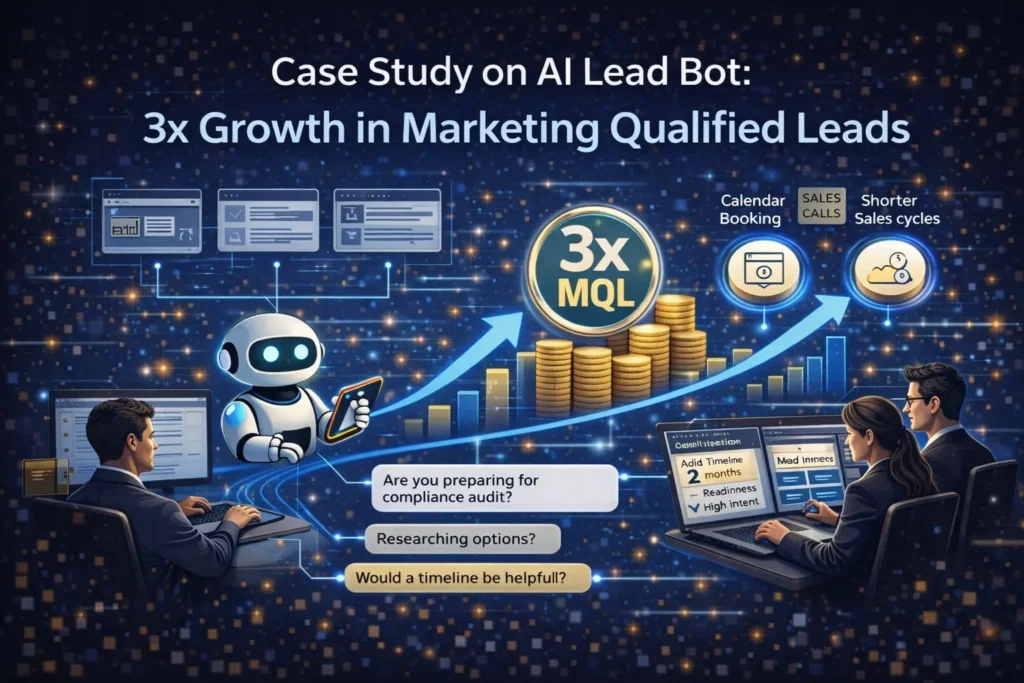
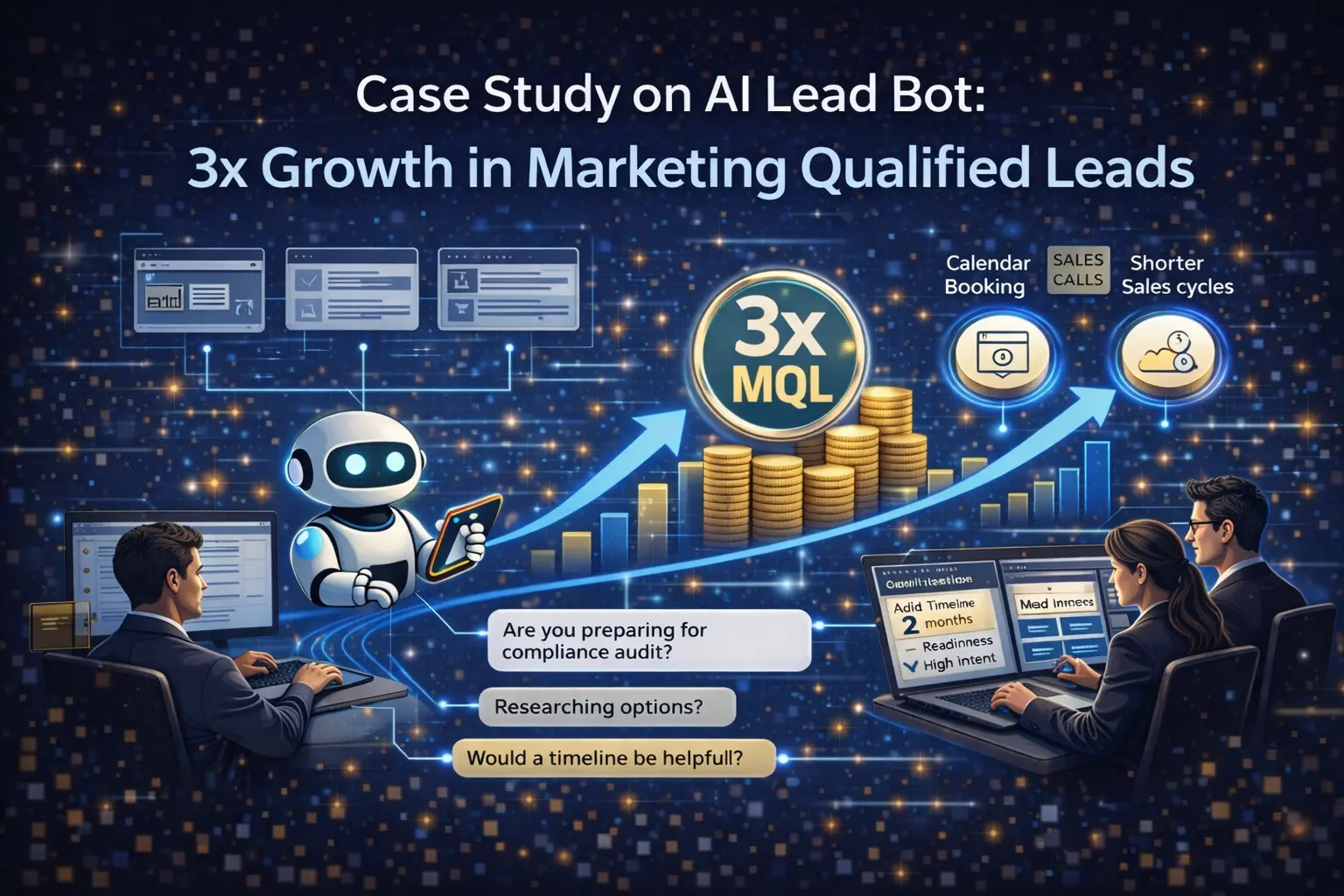
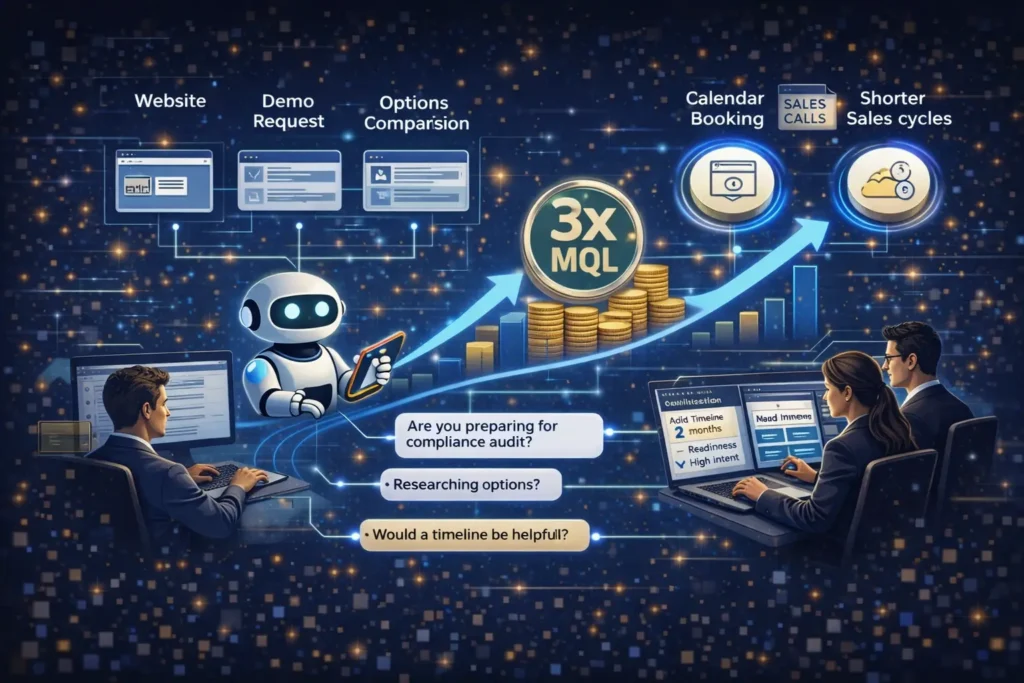
The AI lead bot appeared when visitors spent meaningful time on pricing or solution comparison pages. It opened with simple, practical prompts instead of aggressive calls to action.
For example:
– Are you evaluating compliance tools for an upcoming audit?
– Are you researching options for future planning?
– Would it help to speak with someone about implementation timelines?
The interaction mirrored a discovery call rather than a static form submission.
Responses guided what happened next.
When high intent was detected, the bot surfaced calendar availability instantly. If the visitor indicated early-stage research, the system offered targeted resources and optional follow-up.
Closing the Speed to Lead Gap
One issue that surfaced during early review was response timing. Even strong leads often waited hours before hearing from sales. In competitive categories, that delay matters.
The AI lead bot removed that gap entirely. Qualification and calendar booking happened in the same session. There was no waiting period, no manual routing, and no overnight lag.
In practice, this meant high-intent prospects spoke with sales while their interest was still active. That immediacy changed conversion momentum.
How We Built the AI Lead Bot
We initiated development by aligning marketing and sales around what actually defines a Marketing Qualified Lead.
That alignment had never been fully formalized before. Once clarified, we mapped conversational pathways reflecting real buying stages.
Rather than collecting all data at once, the AI bot gathered context gradually. It adapted based on previous answers.
Behind the scenes:
- Responses were written into the CRM automatically
- Qualification rules updated lead status in real time
- Sales teams received summary notes before outreach
- Low-intent prospects entered nurturing sequences without manual sorting
The technology actually supported the workflow. It did not replace it.
Early Reactions from Sales
Within weeks of launch, sales representatives noticed a clear difference in communications.
Conversations began differently. Instead of starting with basic discovery questions, they could reference specific statements made during the bot interaction.
Calls felt more focused. Fewer meetings ended with ‘let’s reconnect in six months.’ or ‘we need more time’.
Prospects who reached the calendar stage were more decisive.
The marketing team also saw a shift. Total lead volume remained similar. The percentage considered ready for sales engagement changed dramatically.
Marketing Qualified Leads increased 3x compared to the previous quarter.
This didn’t happen because the volume of traffic improved. It happened because of superior Lead Scoring and qualification precision.
Impact on Pipeline Forecast Accuracy
One unexpected outcome of the AI lead bot was improved sales forecasting. Because qualification happened before leads entered the active pipeline, projected revenue became more realistic.
Sales managers could distinguish between exploratory inquiries and time-sensitive opportunities.
This reduced inflated pipeline projections and helped leadership plan resources with greater confidence. Cleaner data at the top of the funnel strengthened decision-making downstream.
Reducing Lead Leakage Across High-Intent Pages
One thing became obvious after reviewing user behavior. People were spending time on pricing and demo pages, sometimes several minutes, then leaving. They were not bouncing immediately. They were hesitating to finish the form and move forward.
Many of those visitors were:
- Comparing vendors side by side
- Double-checking compliance fit before booking time
- Trying to gauge internal readiness
- Unsure whether they were “ready enough” to speak with sales
The AI lead bot did not apply friction; it provided contextual engagement at the right moment. That small interaction reduced uncertainty and gave visitors a way to move forward without feeling locked into a formal commitment.
What Changed Inside the Funnel
The improvement was not just numerical. The marketing team saw a spike in high intent leads, which improved follow-up timing. Sales cycles shortened as initial conversations started at a more advanced stage.
Internal discussions between marketing and sales became less defensive. Qualification criteria were no longer debated abstractly. They were reflected in conversational data.
The AI lead bot was never meant to generate demand. It clarified it.
Strengthening Pipeline Hygiene
Not every visitor who fills out a form is ready to make a purchasing decision. Before implementation, exploratory prospects entered the same reporting dashboards as serious buyers.
The AI lead bot introduced structure. Visitors who were still browsing remained in nurturing flows. Only high-probability opportunities moved forward.
This significantly improved Pipeline Hygiene. Sales teams stopped chasing low-intent contacts and focused their time on prospects who had clearly expressed urgency.
Leadership noticed the difference quickly. Forecast conversations became more realistic. Pipeline discussions became cleaner.
Conversion Metrics (Post-Implementation)
- MQL Conversion Rate: 3x increase
- SDR Efficiency: 45% more time spent on qualified conversations
- Calendar Booking Rate: 22% lift from high-intent pages
- Lead Leakage: Reduced by 35% on pricing and solution pages
Build a Reliable AI Lead Bot with Amenity Technologies
If your website is generating traffic but not translating intent into revenue, structured conversational qualification can change that dynamic.
Amenity Technologies helps businesses turn their websites into a 24/7 Sales Development Representative that scales with your traffic, not your headcount.
Connect with our team to explore how conversational qualification can strengthen your conversion pipeline without increasing acquisition spend.