




In recent years, generative AI has clearly moved beyond pilots and proof-of-concepts. Nowadays, enterprises are effectively incorporating generative AI across customer support, internal operations, sales, content, and IT to achieve measurable efficiency, enhanced decision-making, and scalable automation.
Businesses no longer question whether generative AI works in theory, but where it delivers real value at enterprise scale.
In this quick guide, we will go through real-world use cases on generative AI for enterprise that are reshaping how large organizations operate, communicate, and compete.
Why Enterprises Are Taking Generative AI Seriously Now
When expanding reach and operations, enterprises are handling thousands of employees, millions of customers, and large volumes of data. Here, traditional automation handles rules well, but struggles with context, nuance, or human-like interaction.
Generative AI easily replaces traditional automation.
This shift has not enabled enterprises to access advanced tools, clearer guardrails, and a stronger understanding of where generative AI adds value without introducing unnecessary risk.
Across industries, adoption is driven by three priorities:
1. Boosting operational efficiency without hiring more people to the teams
2. Enabling data-centric decision-making instead of manual analysis or guesswork
3. Improving customer experience without sacrificing consistency
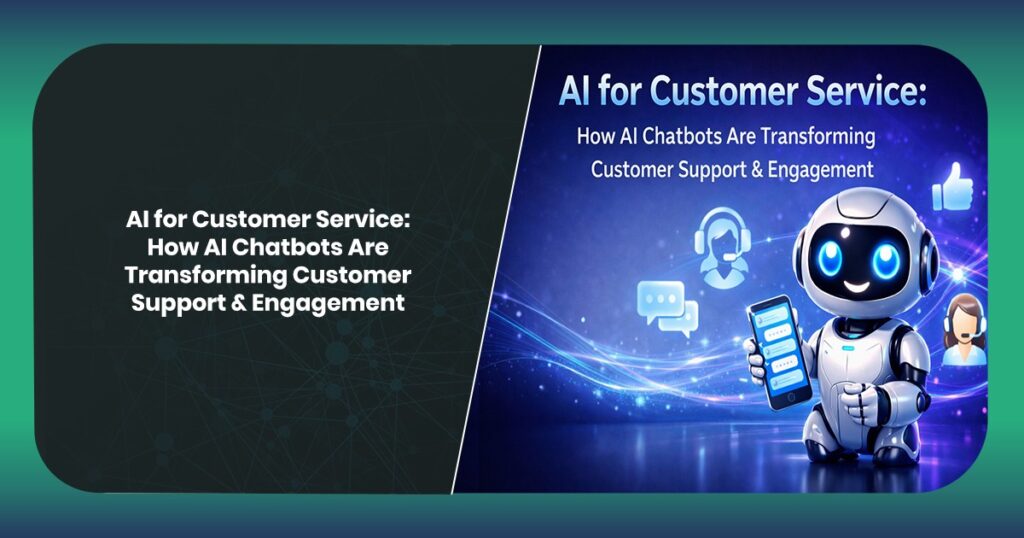
Generative AI in Enterprise Customer Support
Customer support is typically the first place where enterprises deploy generative AI, and for a good reason.
How It’s Used
Nowadays, enterprises are leveraging generative AI to:
- Generate accurate responses to address customer questions effectively
- Quickly summarize long support tickets and conversation history
- Assist support agents by reply suggestions
- Power chatbots using RAG-based systems
Rather than replacing support teams with automated systems, generative AI works alongside them, which reduces response times and cognitive load.
Real-World Example
A telecom enterprise uses generative AI to analyze past ticket data and product manuals. When a customer raises an issue, the enterprise AI generates a suggested response for the agent and highlights relevant troubleshooting steps. Resolution time drops while response consistency improves across regions.
Business Impact
Involving generative AI in enterprise customer support can drive:
- Faster resolution
- Lower agent burnout
- Consistent support quality across regions
- Better handling of peak traffic
Generative AI can act as a trustworthy support accelerator when combined with internal knowledge bases or RAG-based systems.
Generative AI for Enterprise Knowledge Management
Handling a massive volume of data in a large organization can be a real struggle, especially when you need to access particular data such as policies, SOPs, internal documentation, and project learnings immediately, and can’t find it. But, with AI for enterprise, data access becomes convenient through conversational queries.
Use Case in Practice
Organizations deploy internal AI assistants trained on internal documents to:
- Answer HR and IT related questions
- Summarize long policies in simple language
- Guide employees through workflow (step by step)
Instead of searching folders or asking colleagues, employees can independently get the answers without wasting any time.
Real-World Example
A global manufacturing organization uses an internal AI assistant to answer safety procedure questions on factory floors. Instead of searching manuals, employees can easily get step-by-step guidance.
Business Value
- Reduced internal support load
- Faster onboarding for new hires
- Enhanced compliance
- Improved employee productivity
Generative AI in Sales Enablement and Lead Qualification
In growing enterprises, sales teams are overwhelmed by a high volume of potential customers across multiple channels. They often spend more time qualifying leads rather than closing deals. With the generative AI integration, the dynamic has shifted.
How Enterprises Use It
- Personalized outreach drafts based on prospect data
- AI-led qualification conversations
- Automated proposal and pitch summaries
- Real-time objection handling suggestions
Real-World Example
A B2B SaaS enterprise uses generative AI to pre-qualify inbound leads through a conversational interface. Only high-intent prospects reach human sales reps, cutting wasted calls and improving close rates.
Why It Works
- Shorter sales cycles
- Enhanced lead quality
- Consistent Messaging
- Sales reps focus on selling, instead of preparing
Generative AI in Content and Communication at Scale
Content plays a critical role in enterprise communication. Enterprises must communicate with a consistent interactive approach with customers, partners, and employees. Generative AI makes it possible.
Enterprise Use Cases
- Drafting internal communications
- Localizing content across regions
- Creating training materials
- Generating marketing and product content drafts
Importantly, AI tools can automate various redundant tasks, allowing in-house teams to refine, approve, and publish the content. This helps them stay focused while scaling operations.
Real-World Example
A multinational retail brand uses generative AI to localize product descriptions and policy updates across multiple regions, ensuring tone and meaning remain consistent while speeding up publishing.
Business Value
With generative AI involvement, enterprises can get benefit from:
- Faster content production
- Brand-aligned messaging
- Reduced content bottlenecks
- Better global consistency
Generative AI in Software Development and IT Operations
Development and IT teams are also seeing tangible gains by introducing generative AI solutions to their day-to-day workflows.
Practical Applications
- Code suggestions and refactoring assistance
- Automated documentation generation
- Incident summaries
- Troubleshooting assistance
It would be incorrect to assume that the generative AI will replace developers or fully automate software development. Instead, it is introduced into operations to reduce friction around repetitive tasks, which it does effectively.
Real-World Example
An enterprise IT team uses generative AI to summarize production incidents and generate root cause reports. Engineers focus on fixes instead of writing documentation.
Measurable Outcomes
- Faster development cycles
- Reduced technical debt
- Improved collaboration between teams
- Better incident response times
Case Study: RAG Chatbot for Business Analytics Blogs
Client Overview
An Australia-based business strategy development company required a sophisticated AI solution to make their extensive knowledge base accessible to both customers and executives. They possessed a massive and growing repository of business strategies and blog posts but lacked an efficient way to retrieve specific insights instantly.
The Challenge
The client’s primary asset was a dataset of 5,000+ blog posts and strategy documents. Users struggled to find relevant information quickly using traditional search methods. The client initially experimented with Vertex AI but faced significant issues with “hallucinations” (inaccurate responses), which eroded trust in the system. They needed a solution that was accurate, scalable, and cost-effective.
The Solution
Amenity Technologies offered custom RAG development services to engineer a cutting-edge tool that allows users to chat with the client’s data in natural language.
- High-Volume Data Ingestion: We implemented a pipeline to ingest and index the 5,000+ blog posts, ensuring the system could handle the large volume of text. The system is designed to handle continuous growth as new blogs are added.
- Vector Database Implementation: We utilized Pinecone serverless vector database to store the embedded data. This allows for semantic search, meaning the bot understands the meaning behind a query, not just keywords.
- Multi-LLM Integration via OpenRouter: To solve the hallucination issue, we moved away from a single-model dependency. We used OpenRouter to integrate multiple LLM APIs into the same pipeline. This flexibility allows us to dynamically select the best-performing model (e.g., GPT-4, Claude) without changing the core code.
- Serverless Architecture: The entire pipeline was deployed on Google Cloud Functions (serverless), ensuring the system scales automatically with traffic while keeping operational costs low. We implemented O-Auth for secure access.
- Automated Knowledge Updates: To keep the bot current, we set up Cloud Schedulers that automatically update the vector database every Sunday at midnight, ingesting any new blogs published during the week.
Key Results
- Eliminated Hallucinations: By switching models and refining the RAG pipeline, we significantly improved response accuracy compared to the client’s previous attempt.
- Instant Access to 5,000+ Documents: Users can now instantly retrieve specific strategies and insights from a massive library that was previously difficult to navigate.
- Zero Maintenance Overhead: The serverless design and automated weekly updates mean the client does not need a technical team to manage the infrastructure.
Technology Stack
- Core: Python, LangChain
- AI & Data: OpenRouter (Multi-LLM), Pinecone (Vector DB)
- Cloud Infrastructure: Google Cloud Functions, Cloud Schedulers
What Successful Enterprise Generative AI Adoption Has in Common
Across industries, growing enterprises noticed real benefits sharing common traits:
- Clear business problems, instead of vague AI objectives
- Seamless integration with existing systems
- Gradual rollout and continuous improvement over time
- Measurable KPIs
The Future Scope: From Tools to Enterprise Intelligence
Generative AI is rapidly evolving from isolated tools into enterprise-wide intelligence layers. As cutting-edge models are becoming more grounded and systems are becoming more integrated, enterprises are increasingly reliant. This dependency is not limited to just responding to users, but to anticipate, recommend, and guide them. The biggest winners are enterprises focusing on practical, revenue-impacting use cases rather than experimentation alone.
If you want to modernize customer support, sales operations, software workflows, or enterprise knowledge systems using generative AI, the difference lies in how it’s implemented.
Amenity Technologies helps enterprises design secure, scalable solutions. You can choose our enterprise AI chatbot development service for solutions that integrate with real business systems, not just chat interfaces.
Talk to our AI experts to identify the highest-impact use cases for your organization and build a chatbot for enterprises that delivers measurable results.
FAQs
Q.1. Do enterprises require custom AI models?
A: Not always. Many enterprises achieve impressive outcomes by using pre-trained or fine-tuned AI models paired with their own data and workflows. You would require custom AI models only when there are strict domain requirements, unique data, or regulatory and performance demands. In these cases, pre-trained models might not drive results that you expect.
Q.2. Does generative AI replace enterprise software?
A: Not at all. Generative AI does not replace enterprise software. Instead, it enhances existing systems by adding intelligence, automation, and better user interaction on top of established workflows and platforms.
Q.3. What’s the most common and biggest mistake enterprises make with generative AI?A: Many enterprises repeat the same mistake of adapting generative AI systems without having a clear problem or success metric in mind. Their trend-driven approach often results in unfocused generative AI implementations, wasted investment, and limited business value.