

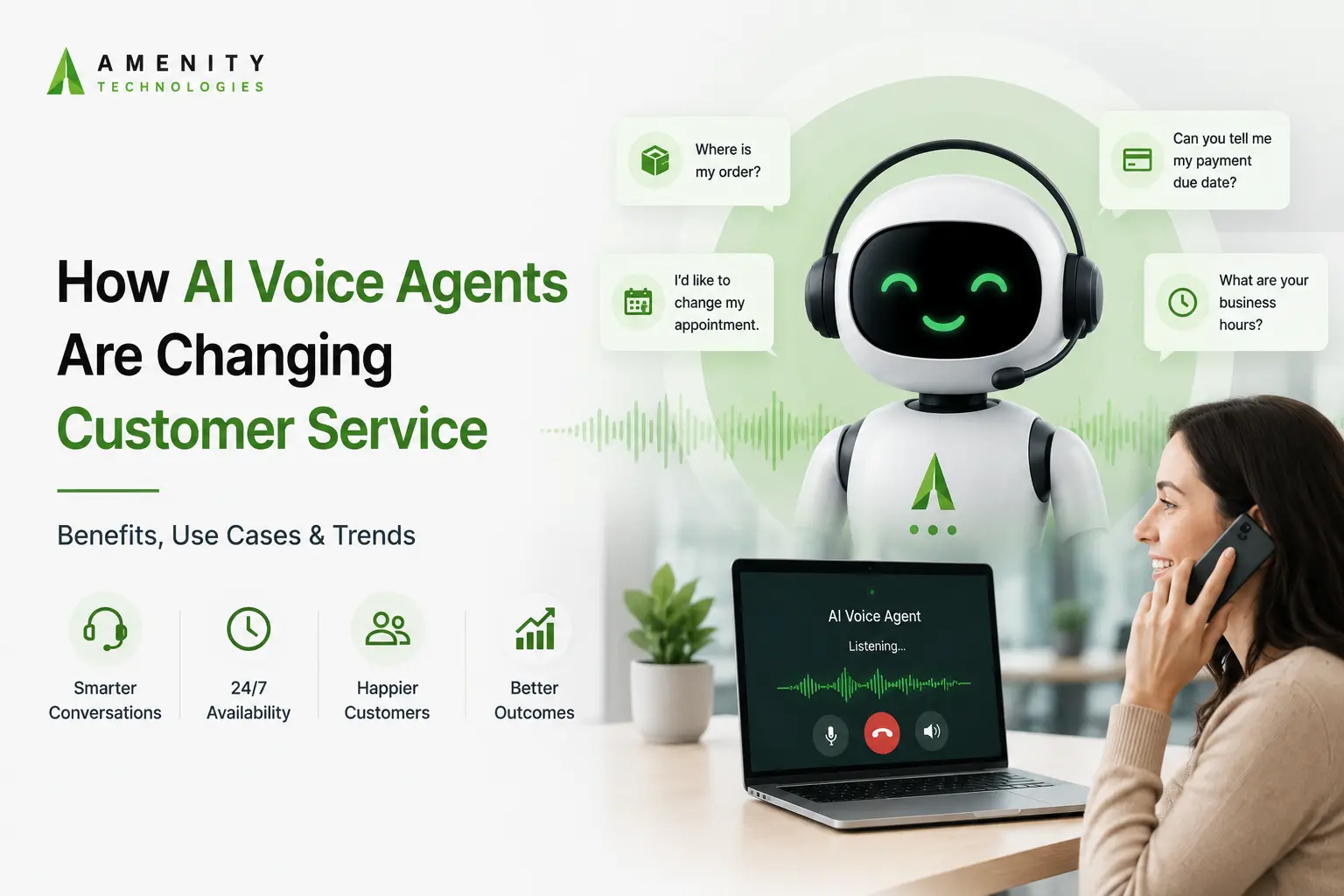
Calling customer support hasn’t changed much over the years. People still hear queues, repeat account details, and explain the same issue more than once before reaching the right person. For simple requests, the time spent waiting often lasts longer than the conversation itself.
That experience is pushing many companies to rethink how phone support works. AI voice agents are taking on straightforward conversations such as appointment changes, order updates, and account queries, leaving support teams with more time for situations where people genuinely expect to speak with another person.
Phone Support Isn’t What It Used to Be
There was a time when customers expected to wait on hold. That patience has largely disappeared. If someone can book a taxi, transfer money, or order food in minutes, they naturally expect the same speed when calling customer support.
Support teams have felt that shift from both sides. Calls arrive around the clock, routine questions fill the queue, and agents spend a surprising amount of time repeating information that’s already available somewhere else. That’s where conversational AI has found its place. It handles the conversations that follow familiar patterns, while people stay focused on the ones that need judgement, empathy, or a closer look.
The Calls That Usually Never Reach an Agent
Spend a day listening to a customer support team and a pattern quickly appears. Many callers aren’t reporting complex problems. They’re asking where an order is, changing an appointment, checking a payment, or confirming business hours. The same conversations come up again and again.
Those are the requests that usually move to AI customer service first.
- Order tracking and delivery updates
- Appointment bookings and cancellations
- Billing and payment questions
- Account verification
- Store hours and location details
- Booking confirmations
When those calls are handled automatically, support agents have more time for conversations that genuinely need experience, judgement, or a personal discussion.
Why It Doesn’t Feel Like the IVR People Are Used To
Most people have experienced a phone menu that feels like a dead end.
The IVR systems follow a fixed menu structure and predefined paths. The conversation stops the moment the caller says something the system wasn’t built to recognise.
Modern Voice Automation works differently. Instead of asking people to follow a menu, it listens to how they naturally explain the reason for the call. That small difference changes the experience.
| Traditional IVR | AI Voice Agent |
| Follows fixed menu options | Understands natural speech |
| Limited to predefined paths | Responds based on intent |
| Struggles with unexpected requests | Handles different ways of asking the same question |
| Often ends in frustration | Knows when to transfer the call to a person |
The technology is critical, but callers usually remember something much simpler—they didn’t have to fight the phone system to get help.
Where Voice AI Makes the Biggest Difference
The first use cases are rarely the most complicated ones. Businesses usually begin with conversations that happen every day and follow a familiar pattern. Once those are handled well, it’s much easier to decide where the technology should go next.
Some of the conversations businesses usually automate first include:
- “Has my order been shipped yet?”
- “I’d like to change my appointment.”
- “Can you tell me when my payment is due?”
- “I need to reset my account.”
- “Could you connect me with the returns team?”
- “What time are you open tomorrow?”
None of these calls are especially difficult to resolve. They simply take time when they arrive one after another throughout the day. Using AI-powered customer support for these routine conversations helps keep phone lines available for the calls that really do need a person’s attention.
The Changes Support Teams Notice First
After implementation and a few weeks of use, the major difference teams could tell isn’t the number of calls. It’s what happens to the calls that remain. Once routine enquiries stop filling the queue, agents have more time to deal with situations that need careful attention, detailed explanations, or a difficult conversation with a customer.
A few changes tend to stand out quite quickly:
- Less time spent repeating the same information.
- Shorter queues during busy periods.
- More consistent responses across every shift.
- Support teams can focus on issues that need judgement instead of routine updates.
Support teams usually notice the difference before customers talk about it. Repetitive calls become less disruptive, and experienced agents spend more of their day solving problems instead of repeating the same answers. That’s often how AI call center solutions earn wider acceptance across the business.
Good Customer Service Still Needs People
Routine Calls Follow a Pattern
Some tasks don’t usually require human judgment, such as checking an order, confirming a booking, or updating contact details. Because these conversations follow predictable patterns, they’re often the first to be handled by voice AI.
Some Conversations Can’t be Automated
Billing disputes, sensitive complaints, technical troubleshooting, or emotionally charged situations are different. Customers usually expect patience, flexibility, and someone who can understand the situation beyond the words being spoken.
The Best Results Come From Working Together
The strongest voice AI solutions don’t try to replace support teams. They reduce repetitive work, recognise when a conversation needs human attention, and hand it over without forcing customers to start from the beginning.
The Technology Is Only Part of the Conversation
People often judge a voice assistant by how naturally it speaks. Customers usually judge it by something much simpler; they want it to understand the reason they’re calling without making them repeat the same information.
That experience depends on more than the AI itself. The system needs access to the right business information, clear call flows, and sensible handovers whenever a person should take over. Without those pieces, even intelligent voice assistants can leave callers frustrated instead of helping them reach a solution.
A good conversation isn’t measured by how long AI speaks. It’s measured by how quickly the customer gets where they need to be.
What Customer Service Teams Are Preparing For
The conversation around voice AI has started to move beyond answering calls. More attention is now being given to what happens before a customer speaks, during the conversation, and even after the call has finished. Support teams are looking for smoother experiences rather than simply adding another layer of automation.
- Callers are spending less time navigating fixed phone menus.
- Customer information is becoming available earlier in the conversation.
- Speaking to a business in different languages is no longer an uncommon expectation.
- AI is handling more follow-up tasks after the call ends.
These changes won’t remove the need for support teams. They’ll change the kind of work people spend their time on, with routine conversations becoming less of the day’s workload and more attention going to cases that genuinely need human judgement.
Building Voice Experiences Customers Will Actually Use
Customers rarely remember the technology behind a support call. They remember whether they found an answer quickly, whether they had to repeat themselves, and whether reaching the right person felt straightforward. Those moments shape how people judge a customer service experience.
Many organisations don’t start with a complete overhaul of customer support. They begin with the calls that are repeated every day and build from there. That’s how many AI voice agent development projects grow over time, eventually becoming part of a broader AI Contact Center strategy instead of a standalone automation initiative.
Voice AI Is Changing More Than Customer Support
The first teams to adopt voice AI are often customer support teams, but the technology rarely stays there. Once businesses see it handling routine conversations reliably, the same approach starts appearing in appointment scheduling, service bookings, internal help desks, and even outbound notifications. The conversation gradually shifts from improving one department to improving how people interact with the business as a whole.
That wider adoption happens because the technology solves a familiar problem. People would rather speak naturally than work their way through long phone menus or wait for simple information that could be shared in seconds.
The Best Results Usually Come From Listening First
Businesses often start by exploring AI. Experienced support teams usually start somewhere else: they listen to what’s already happening. Call logs quickly reveal recurring questions, overloaded queues, and conversations that take longer than they should.
Those patterns usually point to the best place to begin. Calls with straightforward, repeatable answers are often the first to benefit from voice AI, and the insights gained from those early use cases make it much easier to expand automation over time.
The Conversation Doesn’t End With AI
The best customer service has never been about answering more calls. It’s about helping people reach the right answer without making the process harder than it needs to be. Voice AI is proving valuable because it removes routine friction while leaving space for human conversations where they matter most.
Every support team already knows which conversations come up most often. Those everyday calls are usually the best place to begin. At Amenity Technologies, we help businesses build voice AI around real customer interactions, making each step practical, measurable, and easier to adopt over time.
FAQs
Q.1. Which customer service calls should a business automate first?
A: High-volume, routine requests that follow predictable patterns such as order tracking, appointment changes, billing queries, and account verification.
Q.2. How do AI voice agents benefit human support teams?
A: By deflecting repetitive inquiries, voice AI shortens queues, reduces call repetition, and frees up human agents to focus on complex, emotionally charged issues.
Q.3. How does Amenity Technologies approach voice AI integration?
A: We build customized voice AI around a company’s real-world customer interactions, ensuring a practical, measurable, and scalable implementation.
