

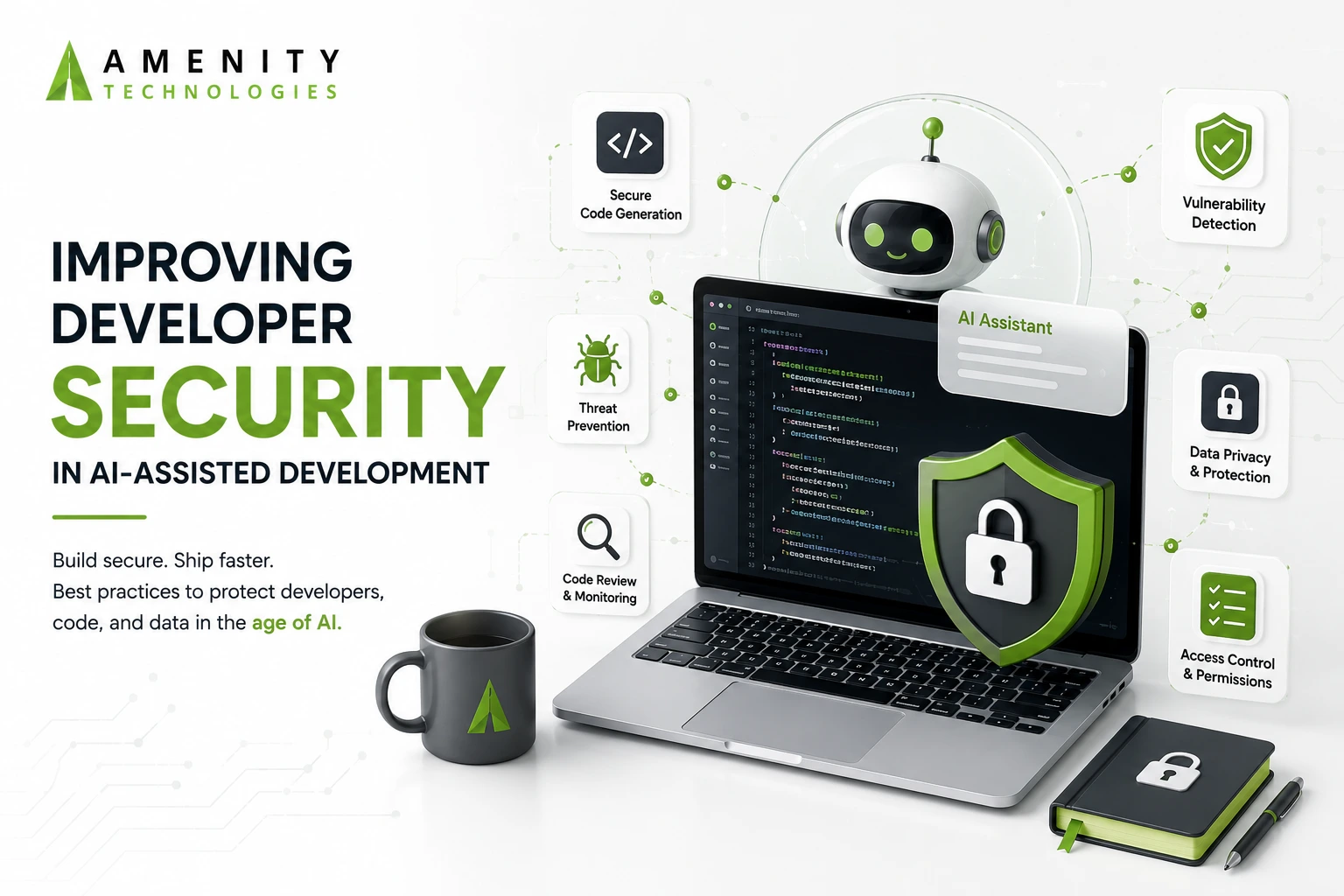
Improving Developer Security in AI-Assisted Development
AI-assisted development has made software delivery noticeably faster, especially for teams trying to keep up with constant release cycles and growing product demands. The challenge is that security reviews haven’t evolved at the same pace, so smaller issues often get overlooked while everyone is focused on shipping features quickly.
Once generated code becomes part of everyday development, outdated packages, weak validation, exposed credentials, and unsafe configurations can quietly blend into the repository without immediate visibility. During fast-moving development cycles, most of these issues don’t look urgent at the moment, which is exactly why they tend to survive longer than they should.
The problem is that most of these risks don’t show up immediately. They usually surface later during testing, scaling, or after deployment when fixing them becomes far more difficult.
That’s why many engineering teams are starting to bring security reviews much closer to the actual development process instead of waiting until the final release stage.
Why Security Problems Often Surface Too Late
Security issues often stay unnoticed until release stages, when fixing outdated packages or unsafe configurations suddenly delays deployment work.
The situation becomes even harder in fast-moving CI/CD environments where code changes are pushed constantly across multiple repositories and pipelines. Security findings start appearing from different tools, reports pile up, and developers end up jumping between warnings that don’t always explain what actually matters.
That’s why many teams are no longer treating developer security as a separate checkpoint. Instead of delaying reviews until release stages, teams are moving validation closer to active development so problems can be caught while the implementation is still familiar and easier to fix.
How AI-Generated Code Creates New Security Risks
Unsafe Generated Implementations
AI-generated code can look perfectly acceptable at first glance, especially during fast reviews. But small security gaps still find their way in missing validation, weak authentication logic, unsafe error handling, or shortcuts that nobody notices until much later.
Open-Source Dependencies Still Need Review
Generated projects often pull in large numbers of third-party packages very quickly. Over time, older libraries and vulnerable dependencies can quietly remain inside the repository simply because nobody realizes they’ve become a problem.
Faster Development Reduces Review Visibility
AI-assisted development has dramatically increased the speed of commits, pull requests, and feature delivery. In many teams, review processes simply haven’t scaled at the same pace. As repositories move faster, smaller vulnerabilities and risky implementations become much easier to miss during normal review workflows.
What Happens When Security Reviews Stay Disconnected
Security problems usually don’t start with one major failure. Most of the time, they build quietly in the background while development keeps moving at full speed. A risky dependency gets ignored, a weak setting stays in place, or generated code enters the repository without anyone reviewing it closely enough.
- Problems found close to release time usually create panic fixes, delayed deployments, and extra pressure across development teams.
- Developers often waste hours jumping between development work and security tools that don’t explain issues in a useful way.
- Review standards start becoming uneven once teams start handling validation in completely different ways.
- Old packages and risky infrastructure settings can remain buried inside the project for far longer than expected.
Security Reviews Commonly Used for AI-Generated Code
Security problems found near deployment often cause delays, rework, and pressure, which is why teams now review code much earlier in the development cycle.
Infrastructure Configuration Reviews
A small infrastructure setting can quietly turn into a larger security problem later. That’s why teams usually review permissions, exposed services, and deployment configurations before changes reach production.
Secure Code Pattern Reviews
Not every risky implementation stands out immediately. Some issues only become noticeable later when weak validation, unsafe logic, or inconsistent patterns start affecting the application.
Input and Execution Flow Reviews
Looking closely at how data moves through the application often helps uncover behavior that seemed harmless during development but creates problems later on.
Credential and Secret Exposure Checks
API keys and sensitive credentials still occasionally reach repositories during testing, debugging, or rushed deployment preparation.
Open-Source Dependency Validation
Some outdated libraries remain inside projects for years simply because nobody realizes they’ve slowly become a security or stability risk.
Why Earlier Security Validation Matters
Fixing security issues is usually much easier when they’re caught early. Developers can still remember the implementation clearly, which makes vulnerabilities faster to understand and far less frustrating to resolve before the project reaches deployment stages.
The opposite tends to happen when reviews are delayed until release preparation. By that stage, developers are forced to go back through older implementations, interrupt ongoing work, and fix issues while release pressure is already building.
When reviews happen earlier, security gradually becomes part of the team’s normal development routine instead of a last-minute scramble before deployment.
Maintaining Security Standards Across Fast Release Cycles
Security compliance often becomes difficult when reviews only happen close to deployment deadlines. Missing logs, incomplete policy checks, and unexpected audit requests can easily slow releases that were otherwise ready to ship.
Many engineering teams now keep security validation much closer to active development pipelines. As updates move through repositories, review processes can identify risks connected to standards such as OWASP Top 10, CWE Top 25, and PCI DSS without slowing every release cycle with heavy manual reviews.
Reducing Alert Fatigue During Security Reviews
Most developers have experienced security scans that generate large numbers of warnings for code that turns out to be completely safe. Over time, teams begin ignoring alerts because too much effort gets spent reviewing issues that never become real security concerns.
That kind of noise gradually slows development work across larger engineering environments. More development teams are now focusing on reducing unnecessary security noise so developers can spend less time sorting through low-priority alerts and more time addressing vulnerabilities that actually matter.
Improving Visibility Across Security Reviews
Security reviews become much harder to track once projects start spreading across multiple repositories, cloud environments, and deployment pipelines. Different teams follow different workflows, use different tools, and review code in different ways, so important findings often end up scattered across places nobody checks consistently.
That’s one reason many organizations are trying to centralize security reviews across active development environments. When repository activity, dependency issues, vulnerability findings, and validation results are visible in one place, teams usually spend less time chasing information and more time actually resolving problems.
Why More Engineering Teams Are Changing Their Security Review Process
Many engineering teams are starting to treat application security as an ongoing part of software development instead of relying only on occasional security scans near deployment. The goal is usually to reduce unnecessary review friction while making security validation easier to manage across fast-moving development environments.
- Reduced Alert Noise: Developers spend less time reviewing low-priority warnings that rarely turn into real security problems.
- Easier Development Reviews: Security validation becomes easier to manage when review checks happen closer to normal coding workflows.
- Clearer Security Visibility: Teams can follow security problems more easily when review findings are not spread across different systems and reporting tools.
Final Thoughts
Most security problems don’t start as major incidents. They usually grow slowly in the background while development keeps moving forward. An outdated dependency stays untouched, a risky configuration gets overlooked, or a small vulnerability slips through review and remains inside the repository longer than anyone realizes.
The challenge is that these issues become much harder to deal with later, especially once deployments, release timelines, and multiple environments are already involved.
That’s one reason many engineering teams are starting to review security much earlier now. Catching problems during active development is usually simpler than trying to untangle them right before release.
As AI-assisted coding becomes more common, security reviews are gradually becoming part of normal day-to-day development instead of something saved only for the final deployment stage.
FAQs
Q.1. Can AI-generated code pass reviews while still creating security problems?
A: Yes. Generated code usually looks correct during rapid reviews because cutting-edge AI tools imitate existing patterns well. The deeper security and maintainability issues usually appear much later.
Q.2. Why are security issues often discovered close to deployment?
A: Many vulnerabilities go unnoticed during active development because teams are focused on shipping features quickly. Problems usually surface later during testing, scaling, or release preparation.
Q.3. Why are development teams moving security reviews earlier in the workflow?
A: Fixing vulnerabilities early is far easier than dealing with them during release pressure. Amenity Technologies helps teams identify security risks earlier across AI-assisted development workflows.
