

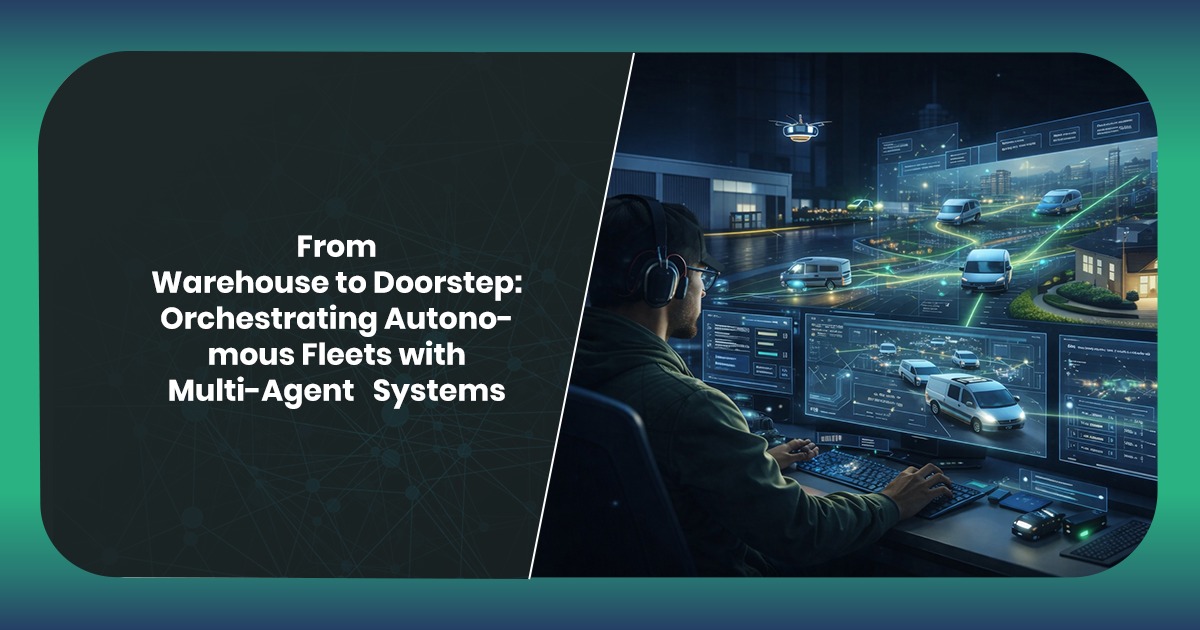
Logistics isn’t just about moving goods from one point to another using fleets. In today’s digitally advanced world, the logistics industry demands better timing, proper coordination, adaptability, and decision-making to stay competitive. Autonomous vehicles, robots, and drones are slowly becoming an integral part of everyday logistics operations. With advancing technology, a new challenge has emerged, which is: how to coordinate with numerous independent machines without much hassle?
This is where multi-agent systems are introduced. Instead of depending on a single centralized controller to manage every decision, multi-agent systems enable autonomous units to think, communicate, and act together using advanced Artificial Intelligence. By implementing these systems, you can ensure logistics fleets that act less like a rigid machine and more like a well-coordinated team. They are capable of adapting to changes quickly and delivering goods efficiently.
In this blog post, we will explore what multi-agent systems are and how they work in autonomous logistics fleets, why they are important, and how they are shaping the future of fleet operations.
What Are Multi-Agent Systems?
A multi-agent system is a robust network of different autonomous, smart agents (software, robots, or humans). The system involves multiple independent agents operating within a shared environment to solve complex challenges that are too large for a single agent to handle. Each agent has:
- Individual objectives
- The ability to observe its surroundings
- The capability to seamlessly communicate with other agents
- The autonomy to make intelligent decisions
Instead of waiting for instructions from a central system, each agent individually manages its situation and collaborates with others to optimize outcomes. This distributed intelligence operation is what makes multi-agent systems specifically effective for large-scale, real-world logistics operations.
Rethinking How Autonomous Fleets Operate
The multi-agent systems are designed to streamline various operations of the logistics team rather than relying on rigid, centrally controlled workflows. You can think of it as a well-functioning human fleet operation team that involves:
- Individuals making important decisions based on their role and situations
- Team members communicate when something changes
- Work is redistributed when someone from the team is unavailable at the moment
- Everyone in the logistics team works toward a shared goal i.e., delivers goods in time and in the best possible conditions.
Multi-agent systems are built keeping this same logic into autonomous logistics. Each vehicle or robot acts independently, but never in isolation. This approach makes fleets more resilient, efficient, and adaptive to different situations.
How Multi-Agent Systems Enable Smarter Fleet Orchestration
When implemented precisely, multi-agent systems can drive better coordination between agents and ensure flexibility to autonomous logistics fleets. To invest in the smart multi-agent system, you should look for a solution that stand out with:
1. Decentralized Decision-Making
Each agent thoroughly assesses local factors like traffic congestion, route conditions, battery levels, and delivery urgency. Based on the real time data, they make informed decisions that cut bottlenecks within the system and improve responsiveness across fleet operations.
2. Real-Time Communication and Coordination
Along with managing their own tasks, these agents also share information with each other. Information sharing includes change in routes, potential delays, as well as task updates. Based on this collective awareness approach, the entire fleet can adjust quickly as conditions change.
3. Dynamic Task Allocation
Rather than just sticking to the same predefined schedules or fixed routes, the multi-agent system enables the fleet teams to assign work in real time. This advanced approach helps the most during unexpected situations. For example, when one vehicle is delayed because of some reason, another nearby agent can take charge to keep the overall delivery schedule on time.
4. Conflict Avoidance and Resource Optimization
Just like information, the resources such as loading docks, narrow routes, or charging stations are also shared between agents. This smart feature helps agents stay on track while avoiding congestion and preventing possible conflicts in between before they even occur.
5. Scalable Operations
The system is designed to allow effective scalability, which means as the fleet grows, the system will scale along with it. You can enable new agents to join fleet operations without overloading a central controller. This feature is quite useful for logistics businesses that are growing consistently. With an advanced multi-agent system, it becomes easier to expand operations without the need for redesigning the entire system.
Real-World Scenarios Where Multi-Agent Systems Shine
Multi-agent systems are particularly effective in different environments where conditions change frequently over time. Real-world examples of logistics operations where multi-agent systems stand out involve:
- Last-mile delivery: Agents update routes in real-time to avoid traffic situations and meet urgent delivery deadlines.
- Warehouse operations: Robots work together to pick, pack, and move goods smoothly without running into each other.
- Urban delivery fleets: Vehicles smartly adjust routes and make parking decisions in real time to avoid delays in delivery time.
- Drone deliveries: Agents easily adjust flight paths in real time to avoid bad weather conditions or airspace restrictions.
In each scenario, coordination between agents takes place in real-time, instead of pre-planned and rigid. They consistently communicate, adjust, and make decisions as conditions change. This leads to smoother operations, quick decision-making, and resilient logistics system performance under dynamic conditions.
The Importance of Multi-Agent Systems in the Future of Logistics
Don’t think of autonomous logistics like a future concept. The advanced technologies are already being used by numerous logistics businesses across the globe. What’s actually evolving is how these autonomous systems are managed.
Multi-agent systems represent a shift from complete control to collaborative environments. Instead of commanding every move, operators can define goals and restrictions, and the system figures out the best way forward.
This approach becomes especially important when logistics networks get more decentralized, more time-sensitive, and more dependent on automation. The ability to orchestrate fleets intelligently will separate efficient operations from struggling ones. In the end, the logistics operations will begin becoming more efficient, smooth, and resilient in an increasingly complex delivery environment.
Final Thoughts: Coordination is the Real Advantage
Nowadays, autonomous vehicles and robots are gaining a lot of attention from businesses across the logistics industry. However, hardware alone doesn’t guarantee success. The real benefit lies in coordination between agents. Multi-agent systems strengthen the coordination part. These solutions offer the structure that allows autonomous logistics fleets to operate smoothly, adapt quickly, and deliver goods reliably. You can implement this system for your logistics operations to remove the complexity of maintaining autonomous fleets properly.
As delivery expectations continue to rise and logistics networks grow more dynamic, multi-agent systems will play a central role in making autonomous fleets not just functional, but truly effective.
FAQs
Q.1. What will happen if the communication between agents gets temporarily disrupted?
A: These multi-agent systems are designed to handle communication gaps. So, even if one agent temporarily loses contact with others, the system continues making decisions depending on local data and predefined rules. And once the communication is restored, it syncs back with the rest of the fleet.
Q.2. Are multi-agent systems suitable for mixed fleets with different vehicle types?
A: Yes. Multi-agent solutions function well in mixed fleets that involve different vehicle types, robots, or delivery approaches. Each agent easily understands its own capabilities and limits. On the other hand, coordination rules ensure that the tasks are assigned appropriately to agents. This makes it easier to combine ground-based vehicles, drones, and warehouse robots within the same logistics operation.
Q.3. Can multi-agent systems work alongside existing logistics software?A: Yes. Multi-agent systems are usually designed to integrate with existing logistics-related solutions, such as routing tools, inventory systems, and order management software. They focus on coordination rather than replacing current workflows. That’s why the integration of multi-agent systems with existing logistics software becomes quite seamless.
