
 ALL ARTICLES




Are your digital platforms truly built on a solid foundation of API development? By 2025, businesses expect everything, from mobile apps to IoT systems, to deliver real-time data and seamless integration. The API economy is growing fast, as the global API management market is expected to grow at a CAGR of 17.1%, and will reach $16.9 billion by 2029.
APIs are required in every aspect of digital operations, and it means that organisations cannot afford weak or inconsistent APIs. They need robust REST API development services, effective GraphQL API development, and hybrid models that support latency-sensitive systems.
What happens when APIs are poorly versioned, inadequately documented or lack proper API security? The result: delayed launches, dissatisfied developers and compromised user experiences.
This guide walks through every stage of API development, from design and versioning to observability and monetisation. If your architecture must deliver both speed and security, then committing to modern best practices will pay dividends.
2025 Trends and Shifts in API Development
APIs have moved far beyond simple data connectors; they now form the operational backbone of every modern application. In 2025, API development is influenced by automation, distributed architectures, and new monetization models that turn APIs into direct revenue drivers.
Businesses now expect faster delivery cycles, low-latency data exchange, and cross-platform consistency. Below are the trends defining this new phase of api development.
1. AI-Driven API Design and Governance
Developers are increasingly using AI-powered tools to simplify API development tasks like generating specifications, validating schema contracts, and automating documentation. These tools not only speed up design but also reduce inconsistencies in large-scale systems.
As enterprises deploy hundreds of microservices, AI-driven API governance ensures consistency across design, versioning, and compliance.
Platforms such as Postman AI and Stoplight AI assist teams by automatically generating OpenAPI schemas and suggesting security or performance improvements. By 2025, AI will also be integrated into API lifecycle management to ensure governance and observability stay aligned as systems scale.
2. Rise of Hybrid and Async APIs
The modern digital ecosystem no longer relies on a single architecture. Today, REST, GraphQL, WebSockets, and event-driven APIs coexist to provide real-time communication and flexible data delivery.
Enterprises are leveraging GraphQL API development to power dynamic frontends, while maintaining REST API development services for standardized backend interactions.
Async APIs and event brokers like Kafka or AsyncAPI make it possible to handle millions of concurrent requests with minimal delay. As businesses expand globally, the demand for low-latency, high-throughput systems continues to rise, making hybrid API development the default model for scalable digital products.
3. API as a Product and Monetization Strategy
In 2025, companies no longer see APIs as backend utilities; they view them as independent, monetizable products. APIs are integrated with API analytics, versioning, and API gateway solutions to measure usage and performance. Developer portals allow external users to subscribe, test, and consume APIs easily, turning them into revenue-generating assets.
With subscription models and tier-based pricing, APIs have entered the Industry 4.0 monetization framework. Businesses that invest in transparent documentation, uptime SLAs, and self-service onboarding can now scale faster while maintaining control over consumption and performance.
Best Practices for API Development in 2025
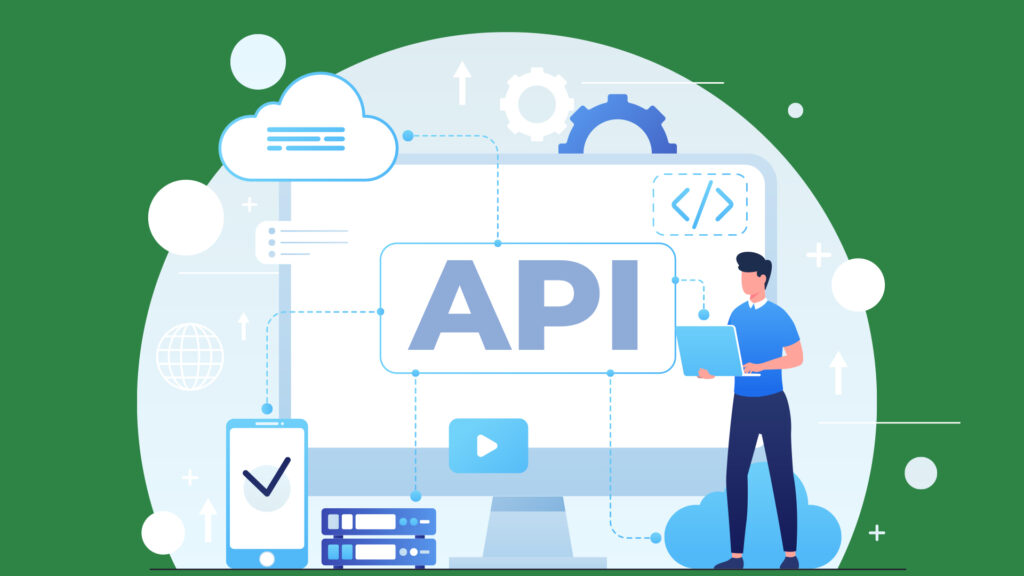
With increasing system complexity, API development now demands precision, collaboration, and continuous optimization. Whether teams are working on REST API development services or GraphQL API development, following structured processes ensures stability, scalability, and performance.
The following best practices represent how leading companies are refining their API design and deployment strategies in 2025.
1. Design Before You Code – The API-First Model
The API-first approach ensures that every endpoint is designed, reviewed, and validated before any backend logic is written. This model starts with a schema definition (like OpenAPI or JSON Schema) that acts as a single source of truth for all teams.
By planning interfaces first, developers, designers, and product managers stay aligned, reducing integration issues later. Adopting this principle across API development cycles promotes reusable architecture and faster delivery, especially when multiple services depend on shared APIs.
2. Versioning and Backward Compatibility
Maintaining version consistency is essential for scaling modern systems. Clear versioning and deprecation policies prevent disruptions for existing consumers. Developers now prefer semantic versioning or header-based version control to manage changes efficiently.
A consistent versioning strategy helps avoid compatibility issues between older and newer clients while allowing teams to innovate without breaking dependencies. Version tracking also contributes to API governance and long-term maintainability.
3. Documentation and Discoverability
Well-written documentation accelerates developer adoption. The new standard is “docs as code,” meaning documentation is stored and updated alongside the source code. This approach ensures that every code update triggers synchronized documentation refreshes.
Developers benefit from request/response examples, error codes, and SDKs that simplify integration. For GraphQL API development, interactive playgrounds like GraphiQL have become integral to developer onboarding. Clear documentation is now a differentiator in API development.
4. Testing and Continuous Integration
Continuous testing ensures that APIs remain reliable under changing conditions. Teams now integrate automated contract testing, schema validation, and performance checks into their CI/CD pipelines.
Tools such as Postman Collections, Newman, and Dredd help simulate API calls and validate schema compliance before deployment. Advanced API testing tools can also perform fuzz testing to uncover potential vulnerabilities. Automated validation minimizes the risk of production issues, improving both security and performance.
5. Scalability and Rate Management
Modern APIs must handle traffic bursts and unpredictable usage patterns. To maintain speed and uptime, developers implement caching, pagination, and CDN edge optimization. Rate limiting and throttling further protect against overloads by capping excessive requests.
With distributed infrastructures, API development also incorporates edge computing consulting principles, placing APIs closer to end users for reduced latency. Combined with API gateway rate controls, this ensures fair resource allocation and consistent performance at scale.
Tools and Frameworks for API Development in 2025
Building reliable, scalable APIs requires the right ecosystem of tools, from design to deployment and monitoring. Modern API development in 2025 focuses on automation, observability, and security. Below are the most impactful tools and frameworks developers rely on to create efficient and future-ready systems.
Design and Specification Tools
The planning phase of API development is where clarity and precision matter most. Tools like:
- Swagger
- Postman
- Stoplight
- Insomnia
remain leading options for creating and validating specifications.
These platforms enable teams to generate mock APIs, simulate responses, and document endpoints before coding begins.
Recent advancements include AI-assisted documentation and automatic schema generation, which simplify onboarding and minimize manual errors. These capabilities make them essential for both REST API development services and GraphQL API development projects.
Backend Frameworks and Platforms
The right framework determines performance, scalability, and ease of maintenance. In 2025, developers favor Node.js (with Express and NestJS) for event-driven workloads, FastAPI in Python for high-speed microservices, and Go for lightweight concurrency.
Serverless platforms like:
- AWS Lambda
- Google Cloud Functions
- Azure Functions
are dominating deployments for teams looking to cut infrastructure overhead. This shift supports flexible scaling and rapid iteration across modern API development workflows.
API Management and Gateways
Centralized gateways have become essential to API orchestration, versioning, and security. Tools like:
- Kong
- Apigee
- AWS API Gateway
offer traffic routing, analytics, and user authentication out of the box.
They simplify complex integrations by enforcing rate limits, validating tokens, and handling version transitions seamlessly. Businesses managing multiple microservices rely on these gateways for consistent policy enforcement and high availability across distributed environments.
Monitoring and Observability
Visibility is critical for maintaining API health. Advanced API observability tools now provide unified dashboards that display uptime, latency, error rates, and transaction tracing in real time.
Platforms such as:
- Datadog
- New Relic
- Grafana
integrate logs, metrics, and traces into a single monitoring layer.
AI-based anomaly detection further strengthens API development performance tracking, allowing teams to identify and fix bottlenecks before they impact users.
Testing and Security Tools
Testing has evolved from a post-development step to an ongoing lifecycle practice. Tools like:
- Postman Collections
- JMeter
- OWASP ZAP
allow teams to test functional, load, and security aspects simultaneously.
These tools automate vulnerability detection, token validation, and permission audits to prevent leaks or misuse. Integrated api testing tools in CI/CD pipelines now ensure that each deployment meets compliance and performance standards, which is an essential step in professional API development.
Security Tips and Defensive Practices for 2025 APIs

Security defines the strength of modern api development. As cyberattacks become more sophisticated, APIs are prime targets, especially those handling financial data, user authentication, or IoT integrations.
Businesses today can no longer rely on basic encryption or access control. Effective API security in 2025 involves layered protection, real-time monitoring, and compliance with global standards like OWASP API Security Top 10, GDPR, and SOC 2.
1. Strong Authentication and Authorization
Every request must prove its identity. Enforcing OAuth 2.1, short-lived JWT tokens, and role-based access control (RBAC) is now a baseline security requirement.
For enterprises using REST API development services or graphql api development, session integrity and token expiration policies play a key role in reducing identity spoofing. Multi-factor authentication for admin endpoints is another must-have for safeguarding credentials across distributed systems.
2. Input Validation and Payload Control
Input validation is a fundamental part of API security. Attackers often exploit weak schema checks through injection or malicious payloads. Implementing strict schema validation, payload size limits, and JSON/XML sanitization helps prevent data manipulation or service disruption.
This is especially important for API development in multi-tenant environments, where shared resources can amplify vulnerabilities if data filtering is inconsistent.
3. Transport Layer and Encryption
Data in transit should always be protected. Modern API gateways and load balancers now enforce HTTPS with TLS 1.3, using updated cipher suites and secure headers like HSTS.
Enterprises are phasing out outdated SSL versions to comply with modern API governance policies. Proper certificate rotation and expiry monitoring also ensure continuous trust between clients and servers, preventing man-in-the-middle attacks.
4. Rate Limiting and Abuse Protection
Public-facing APIs are particularly vulnerable to abuse. Rate limiting, throttling, and quota-based controls have become mandatory in production-ready API development environments.
These practices protect systems from DDoS, brute-force, or token-stuffing attacks. Cloud-native tools like AWS WAF and Cloudflare API Shield automate these defensive measures at scale, ensuring fair usage and stability across microservices.
5. Real-Time Monitoring and Incident Response
A proactive defense strategy is incomplete without continuous monitoring. Modern API lifecycle management integrates observability platforms that detect anomalies in real time.
Enterprises now rely on centralized logging, traffic analytics, and alert systems powered by API analytics tools. In case of a breach, automated playbooks enable faster remediation and forensic tracking.
Adopting a zero-trust architecture ensures that every request, internal or external, is verified, logged, and validated, minimizing the risk of unauthorized access.
How Amenity Technologies Can Help with API Development?
Amenity Technologies simplifies complex API development through a mix of engineering depth, automation, and proven delivery processes. From design to deployment, every step focuses on reliability, speed, and interoperability, so your APIs perform consistently across systems and use cases.
1. Strategic API Architecture
Every project begins with a clear understanding of your existing systems and business logic. Amenity designs scalable API frameworks that can handle high transaction volumes and complex data flows without bottlenecks.
2. End-to-End API Lifecycle Management
From design and documentation to versioning and retirement, Amenity manages the entire lifecycle using DevOps pipelines, continuous testing, and performance monitoring. This ensures faster iteration cycles and seamless integration.
3. Security and Compliance Built In
Amenity enforces authentication, encryption, and access control at every endpoint. Compliance with standards such as OAuth 2.0, OpenID Connect, and GDPR is embedded by default, reducing your exposure to security risks.
4. Integration Across Cloud and Legacy Systems
Whether you’re connecting cloud-native apps or on-premise infrastructure, Amenity engineers APIs that ensure consistent communication and data accuracy across environments.
5. Performance Optimization and Monitoring
With real-time analytics and monitoring tools, Amenity helps track latency, throughput, and error rates, enabling proactive fixes before users notice issues.
6. Dedicated Support and Scalability Planning
Post-deployment, Amenity continues optimizing your APIs to support future growth. The team provides maintenance, upgrades, and capacity planning to align performance with business expansion.
Conclusion
As businesses expand their digital ecosystems, robust API development has become essential for performance, interoperability, and scalability. Amenity Technologies combines engineering precision, security-first architecture, and lifecycle automation to help organisations build APIs that work seamlessly across systems and environments. Whether it’s integration, optimization, or governance, Amenity ensures your APIs drive measurable business outcomes.
FAQs
Q1. What makes API development important for modern businesses?
APIs connect applications, services, and data across digital systems. They enable automation, real-time communication, and faster innovation, helping businesses deliver consistent digital experiences.
Q2. How does Amenity Technologies ensure API security?
Amenity applies strict encryption, authentication, and access control protocols. Each API is tested for vulnerabilities and compliance with standards such as OAuth 2.0 and GDPR.
Q3. Can Amenity integrate APIs with legacy systems?
Yes. Amenity engineers APIs that work across both modern and legacy systems, ensuring compatibility without disrupting existing workflows.
Q4. What industries can benefit from Amenity’s API development services?
Any sector that depends on data exchange or platform interoperability, finance, retail, logistics, healthcare, or manufacturing, can benefit from Amenity’s API solutions.
Q5. Does Amenity offer post-deployment API support?
Yes. Amenity provides ongoing maintenance, monitoring, and optimization to keep APIs secure, high-performing, and ready for future scaling needs.