
 ALL ARTICLES
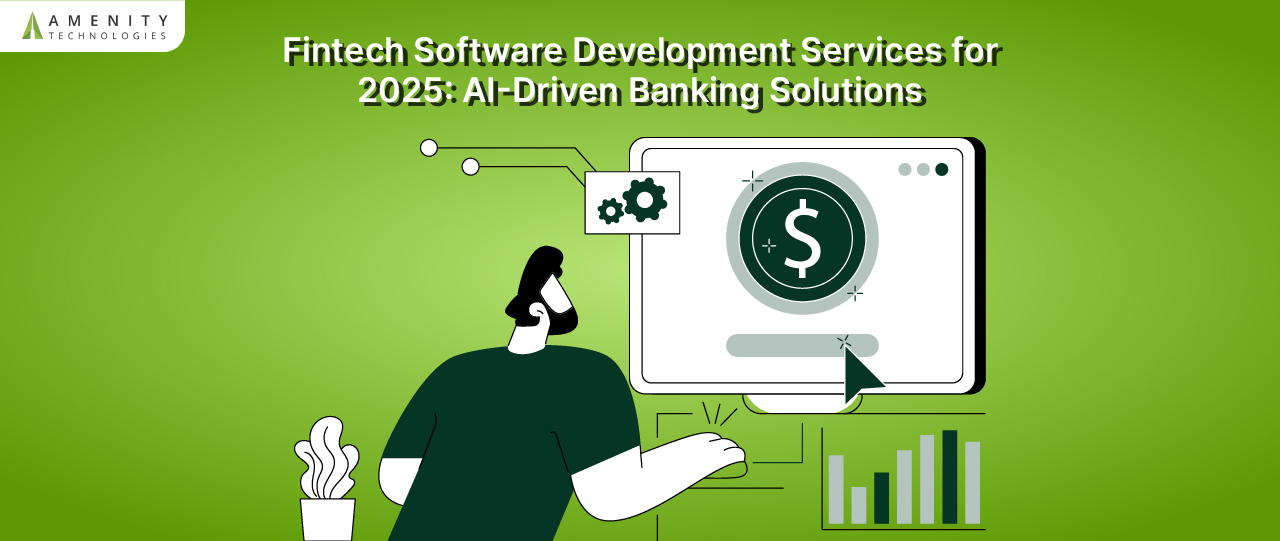



The global fintech software development market is projected to reach $394.88 billion in 2025, growing at a compound annual growth rate (CAGR) of 16.2% through 2032 Fortune Business Insights. This surge is driven by financial institutions’ increasing reliance on AI-first financial platforms to meet evolving customer expectations and regulatory demands. But what does this mean for your business?
In 2025, adopting fintech software development services isn’t optional, it’s a strategic necessity. With fraud detection AI, payment automation tools, robo-advisors, and AI KYC/AML systems becoming standard, businesses must integrate these technologies to remain competitive. Yet, many companies still hesitate. Why? Is it the complexity of implementation? The perceived cost? Or perhaps a lack of understanding of the tangible benefits?
This post explores the essential components of modern fintech software development services and how selecting the right partner can drive innovation, ensure compliance, and enhance user experience.
What Modern Fintech Software Development Services Must Deliver?
In 2025, fintech software development services are integral to the financial sector’s evolution. To remain competitive, institutions must adopt solutions that are not only innovative but also secure, scalable, and compliant. The following capabilities are essential for any fintech software development partner:
1. AI-First Core Capabilities
Modern financial services demand intelligent solutions. Fraud detection AI systems are crucial for identifying and mitigating fraudulent activities in real-time. Robo-advisors provide automated, algorithm-driven financial planning services, offering personalized advice at scale. Additionally, credit scoring models utilize alternative data to assess creditworthiness, expanding access to financial services. Trading bots execute trades at optimal times, enhancing trading efficiency and profitability. These AI-driven tools not only improve operational efficiency but also enhance user experience and trust.
2. Secure Integration
As financial services become more interconnected, secure integration is paramount. AI-enabled KYC/AML systems ensure compliance with regulatory standards by verifying customer identities and monitoring transactions for suspicious activities. Open banking APIs facilitate secure data sharing between financial institutions, promoting innovation and customer-centric services. Embedded finance APIs allow non-financial platforms to offer financial services, broadening access to financial products. A robust integration framework ensures that these components work seamlessly together, providing a secure and cohesive user experience.
3. Intelligent UX
User experience is at the forefront of fintech innovation. Mobile banking AI enhances user interactions by providing personalized services and support through mobile platforms. Personal finance apps empower users to manage their finances effectively, offering features like budgeting tools, expense tracking, and savings goals. Smart dashboards present financial data in an intuitive manner, aiding users in making informed decisions. An intelligent UX design not only attracts users but also retains them by providing value and ease of use.
4. Regulatory Readiness
Navigating the complex regulatory environment is a significant challenge for fintech companies. Compliance with regulations is non-negotiable. Explainable AI ensures that AI-driven decisions can be understood and audited, fostering transparency and trust. Transparent audit trails provide a clear record of transactions and decisions, facilitating compliance and accountability. A development partner must integrate these features into the software to ensure adherence to regulatory standards and mitigate legal risks.
5. Scalable Architecture
Scalability is essential for accommodating growth and adapting to changing market demands. Trusted ML pipelines support the development and deployment of machine learning models, ensuring consistency and reliability. Cloud platforms offer flexible infrastructure that can scale resources up or down based on demand, optimizing cost and performance. Real-time data engines process and analyze data instantaneously, enabling timely decision-making. A scalable architecture ensures that the software can handle increased loads and evolving requirements without compromising performance.
Selecting a development partner that excels in these areas is crucial for success in the competitive financial services industry.
Key AI-Driven Banking Trends for 2025
In 2025, the integration of AI into financial services is not just a trend—it’s a fundamental shift. Financial institutions are increasingly adopting AI technologies to enhance efficiency, security, and customer experience. The following are the most impactful trends shaping the industry:
1. Agentic & Multimodal AI
Financial institutions are moving towards agentic AI, systems capable of autonomously performing tasks across various data types and touchpoints. This advancement allows for more efficient operations and personalized customer interactions. Additionally, multimodal AI is emerging, enabling systems to process and understand multiple forms of data—such as text, voice, and images—simultaneously. This capability enhances decision-making processes and improves user experiences.
2. Cost & Productivity Gains
AI adoption in banking is leading to significant cost reductions and productivity improvements. According to McKinsey, AI adoption is expected to represent $1 trillion in value to the global banking sector annually through a combination of efficiency gains and new commercial opportunities. This includes savings from automation, improved risk management, and enhanced customer service.
3. AI-Powered Fraud & Threat Detection
The rise of AI is transforming fraud detection and security measures in banking. AI models can analyze vast amounts of transaction data to identify anomalies and potential fraudulent activities in real-time. Additionally, AI-enhanced KYC/AML systems are improving compliance by automating identity verification and monitoring for suspicious activities. These advancements are crucial in combating increasingly sophisticated cyber threats.
4. Generative AI in Finance
Generative AI is beginning to play a significant role in financial services. This technology can generate human-like text, enabling automated report generation, customer support, and content creation. In finance, it assists in drafting regulatory reports, creating personalized financial advice, and enhancing customer interactions through chatbots and virtual assistants.
5. AI Adoption Acceleration
The adoption of AI in financial services is accelerating. A survey by nCino indicates that 75% of banks with over $100 billion in assets are expected to fully integrate AI strategies by 2025. This widespread adoption underscores the importance of AI in staying competitive and meeting customer expectations in the financial sector.
Why is Amenity Technologies the Right Fintech Software Development Services Partner in 2025?
Selecting the right partner for fintech software development services can determine the success of AI integration in financial operations. Amenity Technologies focuses on delivering comprehensive solutions that combine deep industry expertise, regulatory awareness, and advanced engineering capabilities.
1. Deep Banking & AI Expertise
Amenity Technologies has extensive experience in developing AI-first financial platforms, covering fraud detection AI, robo-advisors, and AI wealth management systems. Our team designs solutions that align with real-world banking requirements, ensuring that AI models are effective, reliable, and tailored to client objectives.
2. Compliance Meets Innovation
Regulatory compliance is integrated into every project. AI KYC/AML and explainable AI systems are implemented to meet legal standards while maintaining operational efficiency. We ensure that every solution respects data privacy, audit requirements, and financial regulations without slowing down innovation.
3. Full-Stack Service Model
From banking software development to mobile banking AI applications, we provide end-to-end services. This includes fintech data platforms, UX design, backend architecture, and deployment pipelines, enabling a seamless integration of AI solutions into existing workflows.
4. Future-Ready Engineering
The company focuses on scalable and adaptable architectures. Projects include agentic AI, generative banking workflows, and real-time trading bots capable of handling large transaction volumes. Their engineering ensures longevity and readiness for evolving financial technology demands.
5. Trust-Driven Delivery
We emphasize transparency and reliability. From initial MVP trials to full-scale rollout, every project is monitored for performance, security, and compliance. This approach guarantees that financial institutions can deploy AI solutions confidently, improving both operational efficiency and client trust.
Conclusion
Fintech software development services in 2025 embed AI directly into banking operations. Solutions must combine intelligent automation, strong compliance, and seamless user experience.
Real-time fraud detection AI, robo-advisors, and AI KYC/AML systems are no longer optional—they define efficiency, security, and customer satisfaction. Choosing a partner that delivers both innovation and trust is essential.
Amenity Technologies provides deep domain expertise, AI-first financial platforms, and enterprise-grade compliance, setting a high standard for fintech software development services that meet the demands of modern banking.
FAQs
1. What are fintech software development services?
They include building AI-enhanced banking applications, including fraud detection AI, robo-advisors, credit scoring models, payment automation tools, and secure onboarding pipelines like AI KYC/AML systems. These services help financial institutions improve efficiency, compliance, and user experience.
2. Why is AI adoption accelerating in fintech?
AI adoption is growing because AI-first financial platforms improve operational efficiency, reduce risk, and enable personalized services. Automation, agentic AI, and generative tools allow banks to optimize processes and better serve customers while controlling costs.
3. How is AI impacting fraud detection?
Fraud detection AI analyzes transaction data, identifies anomalies, and enhances security with biometric verification. Combined with AI KYC/AML, these systems strengthen defenses against evolving threats and ensure regulatory compliance.
4. Why use agentic and generative AI in banking workflows?
Agentic and generative AI automate tasks like report generation, customer guidance, and advisory services. They increase speed, reduce human error, and enable deeper engagement with clients, improving service quality and operational efficiency.
5. How much can AI reduce software costs?
Implementing AI tools in banking software development can save a significant percentage of costs by streamlining operations, optimizing workflows, and reducing the need for manual intervention.
6. What should I look for in a fintech AI development partner?
Seek a partner with experience in AI-first financial platforms, domain expertise, compliance capabilities, full-cycle delivery, and strong banking software development skills. Amenity Technologies demonstrates these qualities across every project.